Santoku vs Gyuto vs Nakiri: Which Japanese Knife Shape You Actually Need
Affiliate disclosure: As an Amazon Associate I earn from qualifying purchases. This article contains affiliate links; purchases may earn a commission at no extra cost to you.
The Question That Comes Before “Which Brand”
Before you even get to comparing brands and steel types — the kind of decisions covered in my guide to Japanese kitchen knives and my breakdown of Japanese knife steel — there’s a more basic question most people skip entirely: santoku vs gyuto vs nakiri, which shape do you actually need? Walk into a shop or scroll a retailer’s site and you’ll see all three marketed as “the essential Japanese knife,” which isn’t especially helpful when you can only justify buying one.
In my experience, this is the decision that trips people up before they even get to brand or steel — and it’s the one most gift guides skip past entirely, assuming everyone wants a gyuto because it looks the most like a “chef’s knife.” That’s not always true, and picking the wrong shape for how you actually cook is a bigger disappointment than picking the wrong brand.
The Short Version
If you only read one section, here it is: gyuto is the general-purpose all-rounder closest to a Western chef’s knife, santoku is a shorter, more compact all-rounder built around how Japanese home cooks actually prep food day to day, and nakiri is a specialist built almost entirely for vegetables. The right answer depends far more on your actual cooking habits than on which one “sounds” more serious.
Gyuto: The Western-Style All-Rounder
The gyuto (牛刀, literally “cow sword”) was developed as Japan’s answer to the Western chef’s knife, and it shows — the curved belly of the blade allows the same rocking motion Western-trained cooks are used to, making it the easiest of the three to pick up if you’ve spent years using a European chef’s knife.
Typical length: 8–10 inches (210–240mm)
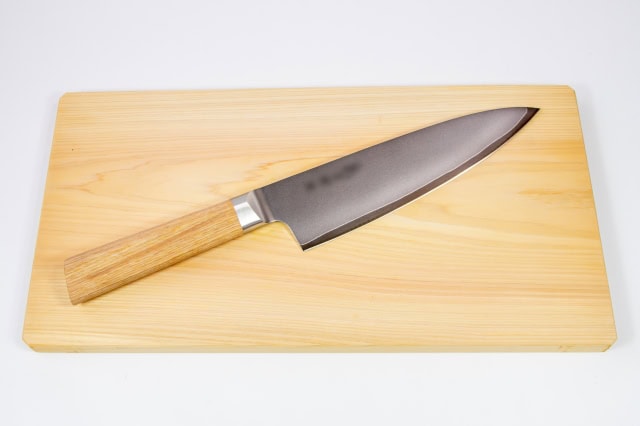
Best for: Meat, fish, and general prep work that benefits from a rocking cutting motion. If you already own a Western chef’s knife and want a Japanese equivalent with a thinner, sharper edge, this is the direct swap.
Trade-off: Because it’s larger and more general-purpose, it’s slightly less nimble for fine, precise vegetable work than a nakiri.
Santoku: The Compact Japanese All-Rounder
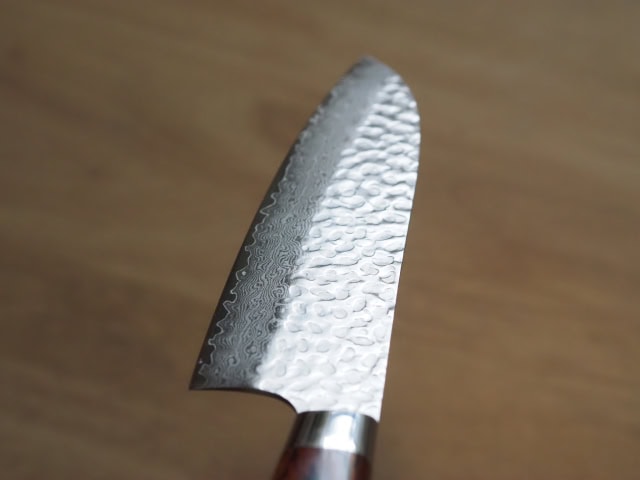
Santoku (三徳, “three virtues”) refers to its versatility across meat, fish, and vegetables — genuinely designed as an everyday, do-everything blade for Japanese home kitchens. The blade is shorter and flatter than a gyuto, with a distinctive sheep’s-foot tip that curves down rather than up.
Typical length: 5–7 inches (130–180mm)
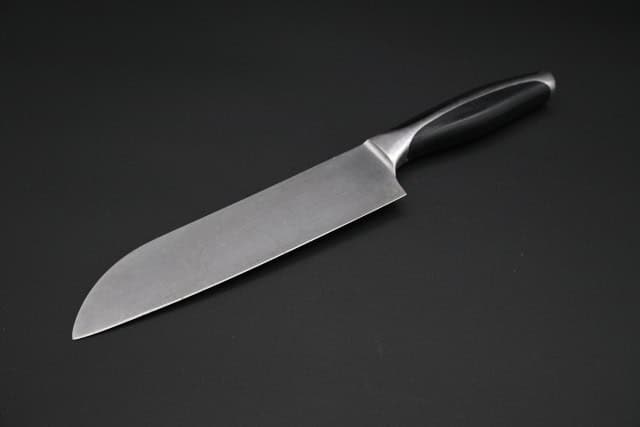
Best for: Smaller hands, smaller kitchens, and cooks who use a more up-and-down chopping motion rather than the rocking style a gyuto rewards. This is genuinely the most common knife shape in Japanese households, and for good reason — it does most everyday tasks well without demanding much technique adjustment.
Trade-off: The flatter blade profile makes the classic rocking cut less natural than with a gyuto, though most people adapt within a session or two.
Nakiri: The Vegetable Specialist
The nakiri (菜切り, “vegetable cutter”) is instantly recognizable by its rectangular, cleaver-like blade with a completely flat edge. It’s built for one motion — a straight up-and-down chop — and it excels at exactly that.
Typical length: 5–7 inches (150–180mm)
Best for: Serious vegetable prep — thin, even slices of cabbage, precise dicing of onions, clean cuts through dense root vegetables. If you cook a lot of vegetable-forward meals, this is genuinely the tool that makes the biggest difference in your prep speed and consistency.
Trade-off: It’s a specialist, not a generalist. The flat edge and squared-off tip make it clumsy for meat, fish, or any task that benefits from a pointed tip or rocking motion.
Once you’ve settled the santoku vs gyuto vs nakiri question for your own kitchen, the rest of the buying decision gets a lot easier — you’re choosing a specific model within a shape you already know you need, rather than guessing at both at once.
Quick Comparison
| Shape | Blade Profile | Best Motion | Best For | Least Suited For |
|---|---|---|---|---|
| Gyuto | Curved belly | Rocking cut | Meat, fish, general prep | Nothing in particular — it’s the generalist |
| Santoku | Flatter, sheep’s-foot tip | Up-and-down chop | Everyday mixed prep, smaller kitchens | Large cuts of meat, fine tip work |
| Nakiri | Flat, rectangular | Straight chop | Vegetable-heavy cooking | Meat, fish, anything needing a pointed tip |
How to Actually Decide
Rather than defaulting to whichever one photographs best in a gift guide, ask yourself these questions:
Do you cook more meat/fish, or more vegetables? Heavy on meat and fish → gyuto. Heavy on vegetables → nakiri. A genuine mix of both → santoku is the reasonable middle ground.
Do you already have Western knife training? If you rock the blade the way most Western cooking instruction teaches, a gyuto will feel the most immediately natural. If you’re newer to cooking or use more of a straight chop, santoku or nakiri will feel more intuitive faster.
Do you have the counter space and grip strength for a longer blade? Gyutos run longer and can feel unwieldy for smaller hands or tighter kitchens — santoku and nakiri are more compact and easier to maneuver.
Are you buying a first knife, or adding a specialist to an existing set? If this is your only Japanese knife, santoku is the safest, most flexible choice. If you already own a gyuto and cook a lot of vegetables, a nakiri is a genuinely useful addition rather than a redundant purchase.
Which One Should You Buy as a Gift?
If you’re shopping for someone else rather than yourself, working through santoku vs gyuto vs nakiri gets a little simpler: santoku is the safest gift because it’s the most versatile and the most forgiving of not knowing exactly how the recipient cooks. A gyuto is a strong choice if you know the recipient already cooks with a Western chef’s knife and rocking motion. A nakiri makes a genuinely delightful, more “insider” gift for someone who already owns a general-purpose knife and clearly loves cooking vegetable-forward meals.
Conclusion
The santoku vs gyuto vs nakiri question isn’t really about which knife is “better” — it’s about matching the blade shape to how you (or your gift recipient) actually cook. Gyuto rewards Western-trained technique and general versatility, santoku is the compact, do-everything workhorse of Japanese home kitchens, and nakiri is the specialist that makes vegetable prep genuinely faster and more precise. Pick the shape first, and the brand and steel decisions covered in my other guides will fall into place a lot more easily.
If you haven’t settled on a specific model yet, my comparison of Japanese kitchen knives covers five well-regarded options across these shapes and price points.