Japanese Whisky Under $50: What to Check Before Buying

Affiliate disclosure: As an Amazon Associate I earn from qualifying purchases. This article contains affiliate links; purchases may earn a commission at no extra cost to you.
With a strict US$50 budget, start by checking the current local price of Suntory Toki, then verify bottle size, tax and delivery. If the total exceeds $50, this guide does not turn it into an under-budget recommendation. It does not contain five verified live deals or a hands-on tasting winner.
The phrase “best Japanese whisky under $50” combines two separate tests: whether the product meets your provenance requirement and whether the exact purchase fits your budget. A brand’s Japanese name answers neither question on its own.
A short, honest shopping list
| Candidate | Why check it | Reason to skip or investigate further |
|---|---|---|
| Suntory Toki | A named Japanese-whisky expression featured in Suntory’s highball guidance | Skip if the delivered total exceeds your limit or the recipient wants a different style |
| Suntory Kakubin | Suntory identifies it as a Japanese whisky; useful to investigate when stocked locally | Do not assume Japan-market pricing or local stock applies overseas |
| Other discounted expressions | A local offer may create an option | Verify the producer’s expression-specific information before calling it Japanese whisky or good value |
Suntory states that Toki follows the Japanese-whisky labeling standards. Its brand portfolio identifies Kakubin as Japanese whisky. Neither page verifies a current under-$50 price in your shop. The shortlist is deliberately conditional rather than padding the article with higher-priced bottles.
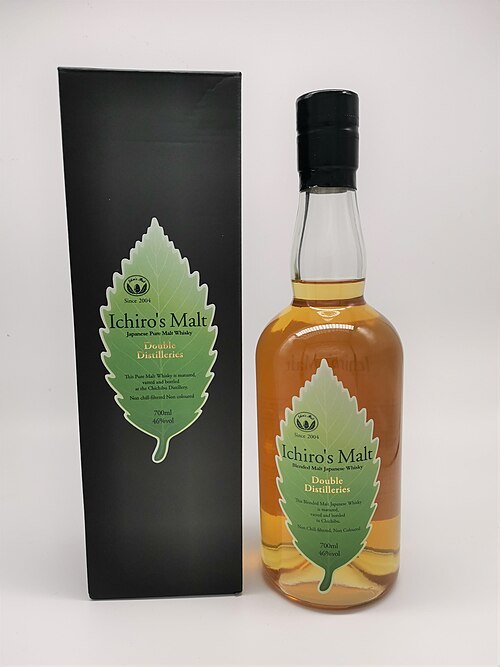
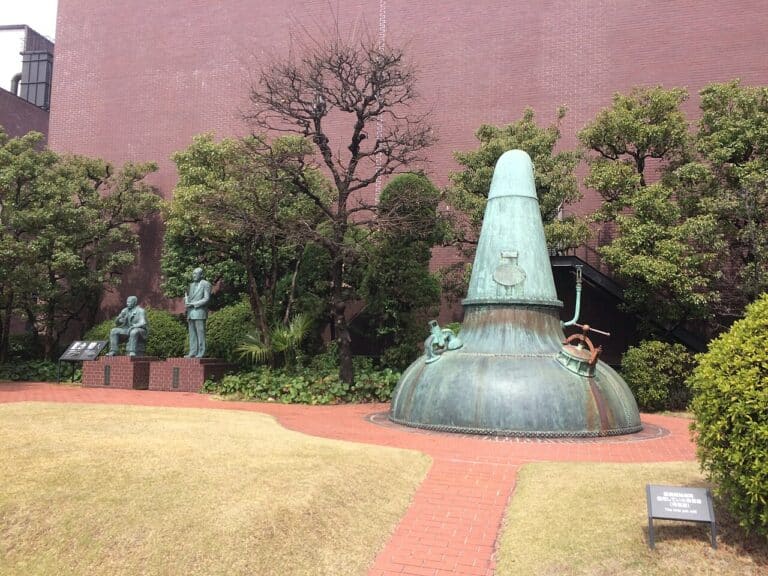
Photo: Keeezawa / Wikimedia Commons · CC BY-SA 4.0. Resized/compressed; no content edits.
Read the Japanese-whisky standard correctly
The Japan Spirits & Liqueurs Makers Association standard includes production in Japan, maturation in wooden casks for at least three years in Japan, and bottling there at at least 40% ABV, alongside raw-material and other production requirements. It is an industry labeling standard, not an award for taste. Imported ingredients and imported finished whisky are also different issues: do not infer the whole production history from a Japanese company name.
Use the producer’s product page or ask the retailer for the exact expression’s provenance statement. Avoid declaring an unfamiliar bottle fraudulent simply because it has a Japanese-looking label, or treating a brand-wide reputation as evidence for every expression.
A $50 checkout calculation
For illustration, a $42 bottle plus $4 tax and $8 shipping totals $54. It fails a $50 delivered budget even though the shelf price fits. These numbers are hypothetical, not a retailer quote. If buying locally, compare the final local total instead of adding a shipping fee that does not apply.
- Confirm USD rather than CAD or AUD; readers in the UK should compare local pound prices.
- Compare the same bottle volume and expression.
- Separate the bottle budget from glasses, soda or gift wrapping.
- Use a retailer that can fulfill the order to the recipient’s location; a listing alone does not confirm delivery.
Choose a serve before an accessory
A highball-focused recipient may value a suitable everyday blend more than an unfamiliar bottle selected only because it was discounted. Someone who drinks whisky neat may have different preferences. The serving guide helps you decide which questions to ask; it does not require specialist glassware.
If nothing suitable fits
Keep the budget instead of buying a product whose identity or delivery terms are unclear. A smaller, clearly identified bottle or a non-alcohol gift may be more appropriate, but compare total value rather than assuming smaller is cheaper per milliliter. For a broader present shortlist, use the Japanese whisky gift guide.