Furoshiki Size Guide: Lunch Boxes, Gifts and Bags
Affiliate disclosure: As an Amazon Associate I earn from qualifying purchases. Product links below lead to Amazon.com.
This furoshiki size guide starts with the object you want to wrap. Choose an approximate cloth size for that use, then allow for the object’s height and enough fabric to tie the intended knot.
Choose a size for one main use first, then experiment with other uses. Do not assume a single cloth will wrap every bottle, lunch box and gift equally well.
Furoshiki size guide: the maker’s approximate ranges
Musubi's FAQ groups its cloths into approximate use ranges. These are helpful starting points rather than fit guarantees for a particular object.
| Approximate cloth size | Maker's example use | What to check yourself |
|---|---|---|
| 45–50 cm | Small gift or lunch-box wrapping | The box's height as well as its width |
| 68–70 cm | Gift wrapping, including a bottle | Space for the chosen knot |
| 90–120 cm | Bag uses | The size and weight of what you intend to carry |
| 130–195 cm | Larger cloth, cover or hanging uses | Available surface or display space |
Musubi also offers size comparisons for bags. Use those examples to understand the change in scale, not to infer a tested carrying capacity.
Try a wrap before choosing the print
Measure the actual box or item, including any lid or handle. If you have a spare cloth of a similar size, use it for a trial. Leave enough material to form the knot without straining it.
This test is only approximate because materials behave differently. It is still more informative than choosing a cloth from an isolated product photograph. If a seller provides a demonstration for your intended object and knot, compare that with your trial.
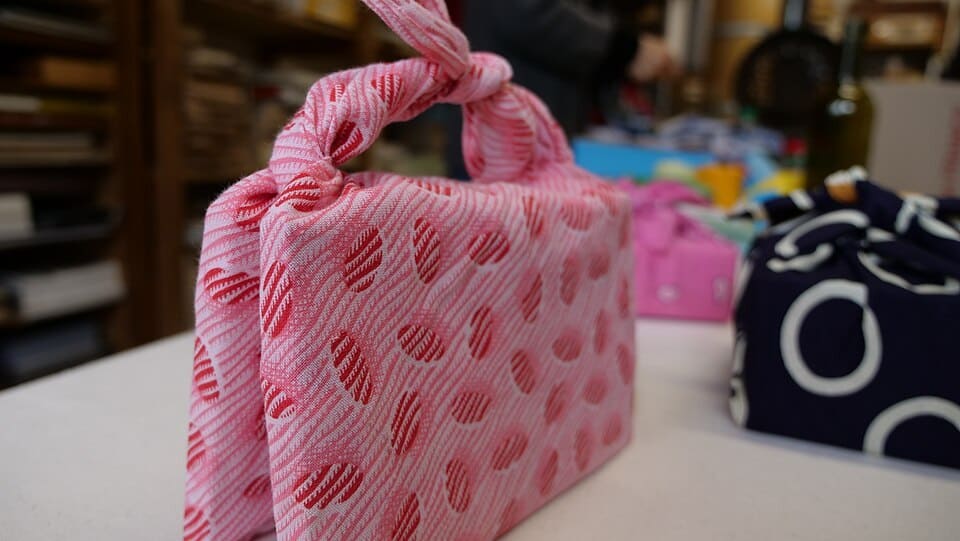
Photo: Culture Japon / Wikimedia Commons · CC BY-SA 4.0. Resized/compressed; no content edits.
Follow a demonstration with your own measurements
Use Musubi’s wrapping videos to compare the hand movements with your intended wrap. Record the cloth width and length, the box width, depth and height, and the method you tried. Practise on a supported, empty box first. If the corners barely meet before tying, try a larger cloth or another demonstrated method rather than treating a tight knot as proof of a good fit.
A photograph of a finished parcel cannot show how much fabric the hidden folds and knot require. Our illustrations show wrapping styles, not a measured load test.
A fit record for a box, bottle or everyday bag
A useful trial records the object and the wrapping method together. An approximate cloth size is a shopping filter; it is not a formula that guarantees a knot will fit.
| Intended use | Record before choosing | Pass/fail question for the trial |
|---|---|---|
| A boxed gift | Box width, depth and height; cloth dimensions; chosen wrap | Can you complete the demonstrated knot with enough loose fabric and without crushing the box? |
| A bottle gift | Bottle height and widest diameter; demonstrated bottle-wrapping method | Is the intended wrap appropriate for that shape, without treating the cloth as protective shipping packaging? |
| A lunch box | The closed box including lid and any handles; washing needs | Does the wrap fit the box, and can the exact fabric be cared for as often as required? |
| A bag arrangement | Contents, intended method and any separately sold accessories | Has the maker documented that use? A size guide alone is not a load rating. |
Try an empty, supported object first. If the corners barely reach, choose a larger cloth or another demonstrated method; do not compensate by pulling hard on a fragile item. Musubi’s FAQ notes that furoshiki need not be perfectly square, so use the actual dimensions rather than assuming both sides are identical.
Check the maker’s material-specific care guide and the cloth’s label. A washable-looking print does not establish washability. When wrapping food gifts, finish the snack date and label checks before covering the box. For a notebook gift, leave the replacement details with it inside the wrap.
Consider the material and its care
Read the fibre composition and washing instructions for the exact cloth. A reusable lunch-box wrap and an occasional decorative gift wrap may have different practical priorities. For the former, easy care may matter most; for the latter, how the design appears when folded may be more important.
Do not infer water resistance, washability or load capacity from the word furoshiki. If you plan to carry something fragile, valuable or heavy, establish whether the proposed use is appropriate rather than relying on a generic bag demonstration.
Decide whether the cloth is part of the gift
If you intend the recipient to keep it, include a simple explanation of its intended use and the care label. If the cloth is your reusable wrapping, make that clear when giving the gift. Both approaches work; uncertainty is what can make the exchange awkward.
Choose a pattern the recipient might enjoy beyond the first wrapping. A design that looks attractive flat may be partly hidden when tied, so look for folded examples before buying.
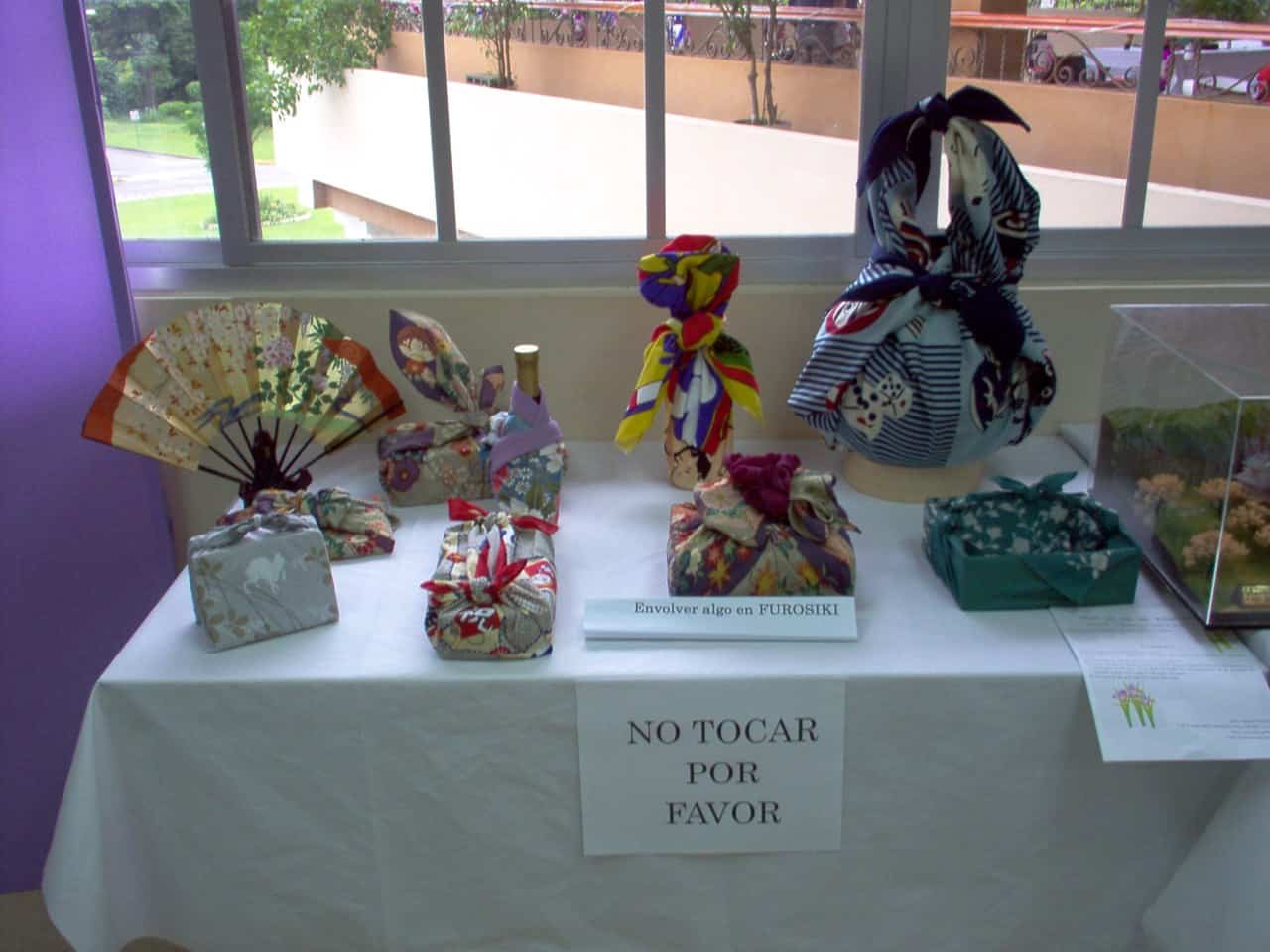
Photo: Taichi / Wikimedia Commons · CC BY-SA 3.0. Resized/compressed; no content edits.
Shopping from overseas
Compare centimetre measurements across US, UK, Australian and Canadian listings. Confirm whether the offer includes only the cloth or also a handle, ring or other accessory. For accessories, check compatibility separately.
For a first purchase, choose one size, one practical use and clear care instructions. Practise with an ordinary box before wrapping the final gift. The result does not have to imitate a shop display to be useful and thoughtful.
If you are choosing the gift itself, our Japanese souvenir guide includes food and craft considerations. The wrapping should serve the gift, rather than becoming a reason to buy unnecessary extras.
Frequently asked questions
Can one furoshiki cover every use?
A single cloth may suit several objects, but it will not fit every box, bottle and bag arrangement. Begin with your most frequent use and compare the maker’s demonstrations. The object’s height and the knot consume fabric, so width alone is not enough to judge fit.
What should I check when giving the cloth as a gift?
Decide whether the recipient is keeping the cloth and include the actual care label. Show a simple use that fits its size, such as wrapping the gift box it came with. Check whether any handles or rings shown in the photograph are included or sold separately.
Editorial approach: This guide uses the manufacturer or operator sources linked above. It is not a hands-on review. Confirm the current instructions for the exact product before purchasing.
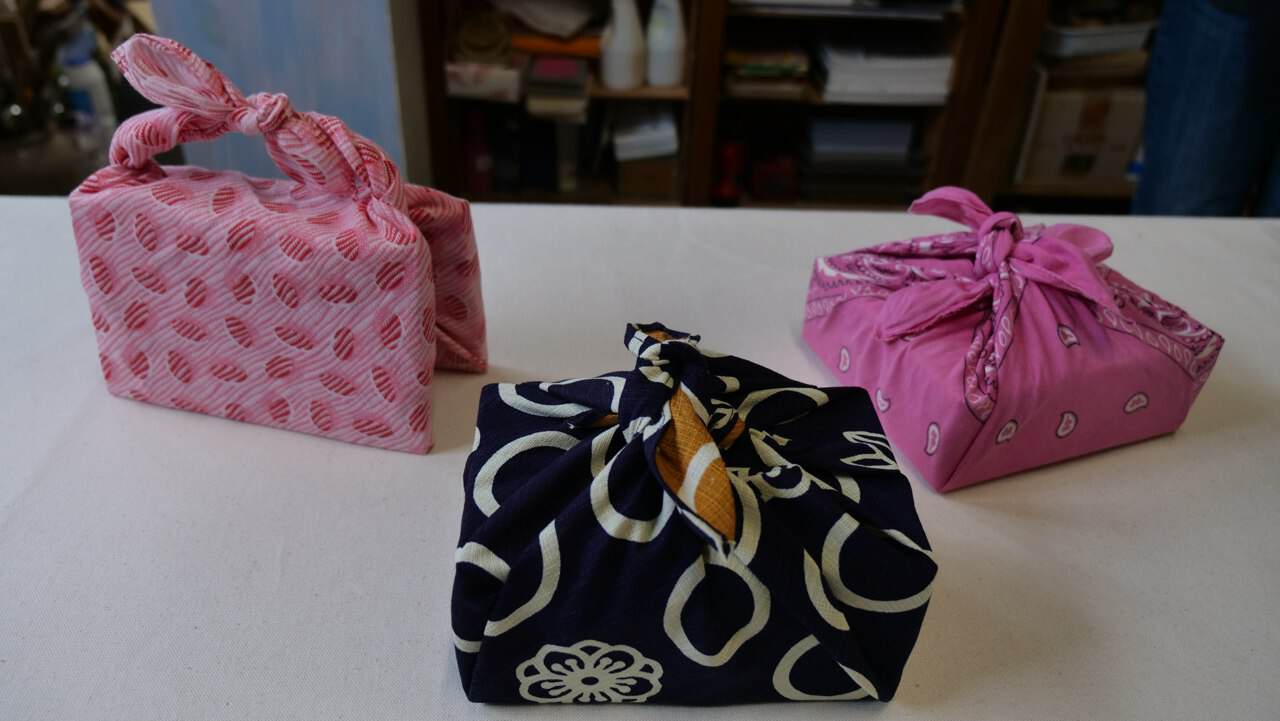
Featured image: Furoshiki cloths tied around gifts of different shapes. Illustrative photograph. Photo: Culture Japon / Wikimedia Commons · CC BY-SA 4.0. Resized/compressed; no content edits.