Best Niigata Souvenirs Beyond Sake: Senbei, Sasa Dango, and More
Affiliate disclosure: As an Amazon Associate I earn from qualifying purchases. Purchases through affiliate links may earn a commission at no extra cost to you.
The best Niigata souvenirs depend on when you will give them. Choose a sealed senbei assortment for sharing, sasa dango for a short journey, kanzuri for a cook who enjoys chili, and metalware for a lasting non-food gift. For a station stop, start with the CoCoLo shops listed below rather than assuming you need a trip to a distant workshop.
Updated September 20, 2026. Shop locations and product details were checked against official sources. This is a researched buying guide, not a report of a recent shop visit or tasting. Availability, prices and the date printed on your particular package take precedence.
Niigata Souvenirs: Choose by Recipient and Journey
| Gift | Best fit | Buy or check before departure | Packing trade-off |
|---|---|---|---|
| Senbei / rice crackers | A group of coworkers or relatives | Count individually wrapped portions and check ingredients | Keep the box rigid; crackers can still break |
| Sasa dango | Someone who wants a regional sweet soon | Ask for the exact expiry date and storage temperature | A short-life food, not a default for a long trip |
| Kanzuri chili paste | A cook who likes fermented seasonings | Choose the exact jar and check the storage label | Seal the jar in a bag and cushion it |
| Tsubame-Sanjo metalware | A cook or design enthusiast | Check maker, material, size and origin | No food expiry; weight and sharp items need planning |
| Ojiya-chijimi / Echigo-jofu textiles | A textile enthusiast or special occasion | Confirm fibre, technique and care with the seller | Light to carry, but specialist pieces merit a planned visit |
Where to Buy Niigata Souvenirs at Niigata Station
Three useful stops are listed by the businesses themselves. Use their current shop pages for opening times before a tight train connection; the stores do not all share the same hours.
| Stop | What to look for | Official location / source |
|---|---|---|
| Tanakaya Honten | Sasa dango; ask how long the specific pack will keep | Official shop list: Niigata Station CoCoLo branch |
| Ponshukan Complex | Rice crackers, local foods and seasonings | CoCoLo Niigata, 2F WEST SIDE |
| Ponshukan Craftsmanship | Cutlery, tableware and kitchen tools | CoCoLo Niigata, 2F WEST SIDE |
For a short stop, pick the food or craft shop that fits your recipient first. Buy delicate fresh sweets after browsing durable gifts. Leave time to read labels instead of buying an unfamiliar chilled item immediately before boarding. Ponshukan also sells sake-based confectionery, so a sweet sold beside non-alcoholic snacks is not automatically alcohol-free.
1. Sasa Dango: A Regional Sweet for the Right Timing
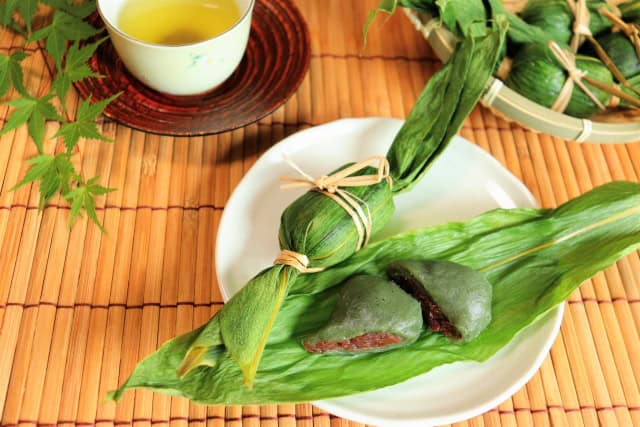
Sasa dango combines mugwort-flavoured rice dough, a filling such as red bean paste and a bamboo-leaf wrapper. Japan’s Ministry of Agriculture describes the Niigata specialty. Unwrap the leaves before eating; do not confuse attractive traditional packaging with a long shelf life.
Tanakaya’s published shipping guidance gives four days for its room-temperature sasa dango, with different limits for refrigerated and frozen delivery. That is a maker-specific example, not a rule for every shop. Ask whether the remaining time covers your journey and the day the recipient will eat it. A frozen pack does not stay frozen simply because it is in luggage.
Choose it for: someone you will see soon. Skip it for: a two-week itinerary without suitable storage. For a large gift list, a smaller fresh pack to eat during the trip plus sealed crackers for home is easier to manage.
2. Senbei: Practical Gifts for Sharing
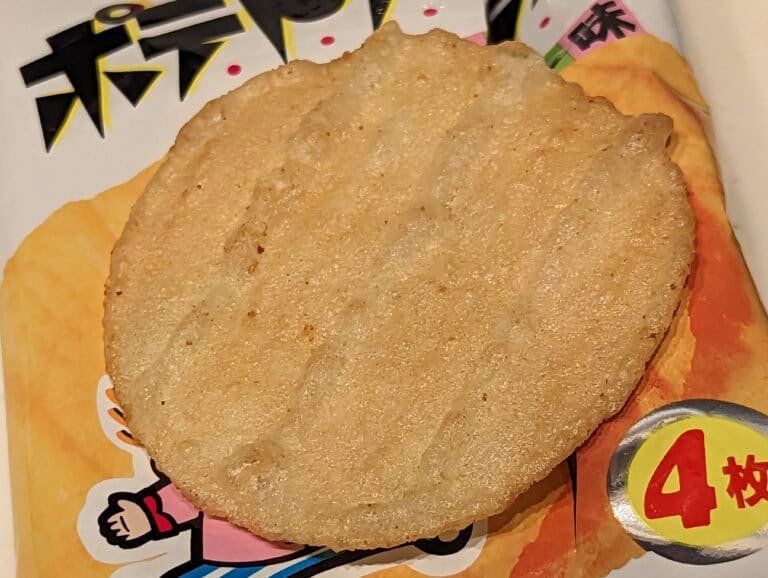
Rice crackers are a useful starting point when you need multiple portions, but packaging matters more than the size of the outer box. Check whether the pieces are individually wrapped, count how many people the box actually serves and protect it from being crushed. Soy sauce, seafood seasonings and peanuts can change the allergen profile, so read the exact product label.
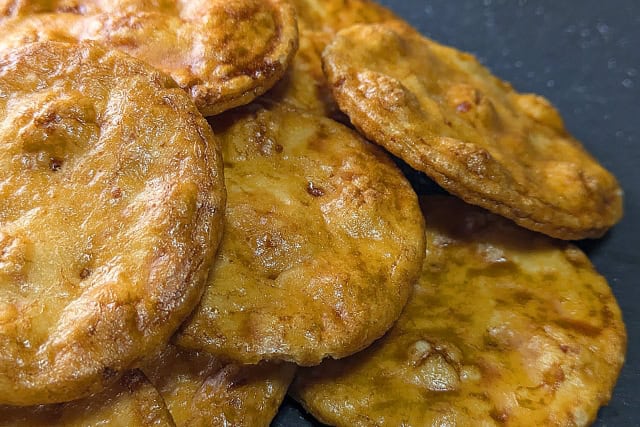
A boxed assortment from a station shop and a multipack bought online solve different problems. The Amazon option below is one snack style with peanuts; choose a locally labelled assortment if variety or presentation is the priority.
3. Kanzuri: A Small Gift for Someone Who Cooks
The producer describes kanzuri’s three-year production process, using chili, rice koji, yuzu and salt. It is a seasoning to use in small amounts, so think about whether the recipient likes cooking with chili rather than choosing it only for novelty.
The official boxed 70 g product lists room-temperature storage before opening, refrigeration after opening and a one-year shelf life. The remaining life depends on the jar you buy. The listed price was ¥950 including tax when checked on September 20, 2026; this is a reference for that exact pack, not a promise of station or overseas pricing. Other kanzuri products can have different ingredients and storage needs.
4. Tsubame-Sanjo Metalware: A Gift Without a Food Deadline
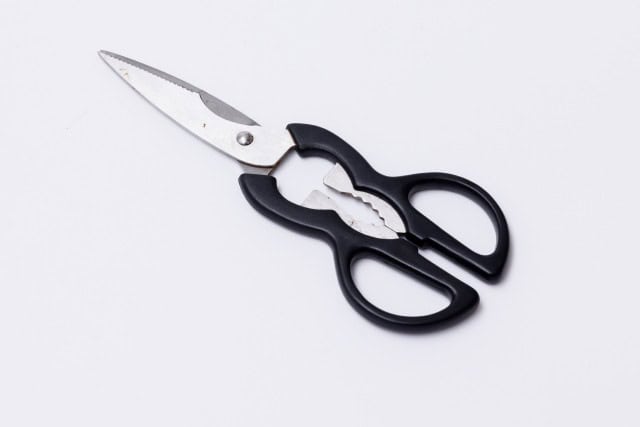
A spoon, serving utensil or pair of kitchen scissors can be easier to give than a food with an unfamiliar storage requirement. Choose around something the person already does: serving rice, making coffee or preparing meals. Inspect the maker’s mark, origin, finish, weight and care label. A regional shop is a starting point, not proof that every item on its shelves was made locally.
Ponshukan Craftsmanship is a station option for browsing tools and tableware. For regional context, read the Tsubame-Sanjo metalworking guide. If a knife is the intended gift, use the Japanese kitchen knife comparison to match the recipient’s care habits and check transport requirements for sharp items before buying.
5. Ojiya-Chijimi and Echigo-Jofu: Buy for the Craft
These traditions use ramie; describing them simply as hemp misses an important detail. UNESCO recognises the textile-making techniques, rather than certifying every souvenir carrying a regional name. Ask what fibre and technique the actual piece uses and follow its care instructions.
This is a better planned purchase for someone who appreciates textiles than a last-minute substitute for a snack box. Establish a budget before visiting a specialist shop; machine-made accessories and work produced using traditional hand techniques should not be treated as the same product.
Before You Pack Food for the US, UK, Australia or Canada
Keep original packaging and receipts, and check the actual ingredients and any plant-based wrapping. Shelf-stable does not automatically mean admissible at your destination. Use the current official guidance for the United States, Great Britain (Northern Ireland has separate rules), Australia or Canada. Check your airport and airline’s cabin-baggage rules for pastes and sharp tools separately.
A Simple Niigata Gift Plan
For coworkers, start with enough labelled, individually wrapped crackers. For a food enthusiast, add sasa dango only if the timing works, or an unopened kanzuri jar with its storage instructions. For someone who cooks, compare one useful tool with their existing kitchen setup. If the recipient also drinks sake, continue to the Niigata sake gift guide and sake label reading guide before selecting the exact bottle.