How to Read a Japanese Sake Label (Without Speaking Japanese)
Affiliate disclosure: As an Amazon Associate I earn from qualifying purchases. This article contains affiliate links; purchases may earn a commission at no extra cost to you.
The Problem With Sake Labels
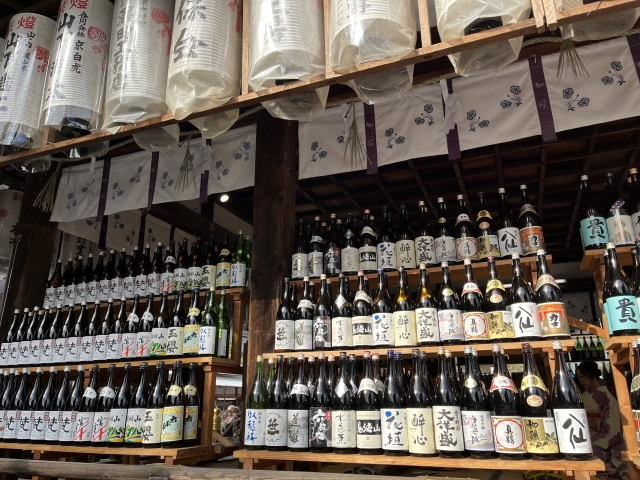
You’re standing in front of a sake shelf — maybe at a depachika in Niigata, maybe at a specialty liquor store back home — and every bottle looks like a wall of beautiful, unreadable calligraphy. Somewhere on that label is information that actually matters: whether the sake is dry or sweet, cheap or genuinely special, mass-produced or made in small batches by a family that’s been doing this for two hundred years. You just can’t get at it, because it’s all in kanji.
Here’s the good news: you don’t need to learn Japanese to shop for sake with confidence. You need to recognize maybe a dozen specific characters and terms, most of which repeat across almost every bottle you’ll ever encounter. Once you know what you’re looking for, a sake label stops being a wall of mystery and starts being a fairly predictable label, not unlike reading a wine label for the first time and realizing “Reserva” and “Grand Cru” aren’t as cryptic as they first seemed.
In my experience, the moment this clicked for me was in a small shop near Niigata station, squinting at a bottle trying to figure out if it was the dry, crisp style I wanted or something sweeter. The shopkeeper pointed at two characters on the label and said, essentially, “that word there — that’s what you’re looking for.” It took about thirty seconds to explain, and I’ve used that same trick on every bottle since.
This guide covers exactly those thirty seconds’ worth of knowledge, organized so you can actually use it standing in a shop with your phone out.
Sake grades split along two lines: whether pure rice was used, and how much the rice was polished down before brewing. (For the official definitions, the Japan Sake and Shochu Makers Association is the authoritative English-language source.)
How to Read a Japanese Sake Label: The Four Key Details
Before we get into individual characters, it helps to know that almost every sake label is trying to communicate four things:
- What grade/category of sake it is (this affects both quality and price)
- How much the rice was polished (a number that tells you a lot about refinement)
- How sweet or dry it is
- Where it’s from and who made it
Let’s go through each one.
1. The Grade: Junmai, Ginjo, Daiginjo, and Honjozo
This is the single most useful thing to learn, because it appears on nearly every bottle and tells you the most about what you’re buying.
Sake grades split along two lines: whether pure rice was used, and how much the rice was polished down before brewing.
| Term (Japanese) | What It Means | What to Expect |
|---|---|---|
| Junmai (純米) | “Pure rice” — made only with rice, water, koji, and yeast, no added brewer’s alcohol | Fuller-bodied, more rice character, often slightly warmer flavor |
| Honjozo (本醸造) | A small amount of distilled brewer’s alcohol is added | Lighter, more fragrant, often a gentler introduction to sake for beginners |
| Ginjo (吟醸) | Rice polished to 60% or less of its original size | More refined, fruitier aroma, lighter body |
| Daiginjo (大吟醸) | Rice polished to 50% or less | The most refined, fragrant, and typically the most expensive tier |
You’ll usually see these combined — Junmai Ginjo, Junmai Daiginjo, Honjozo — and each combination tells you both whether alcohol was added and how polished the rice was. As a rough shortcut: the more polishing (more “ginjo”), the lighter and more fragrant the sake; the more “junmai,” the more rice character and body it has.
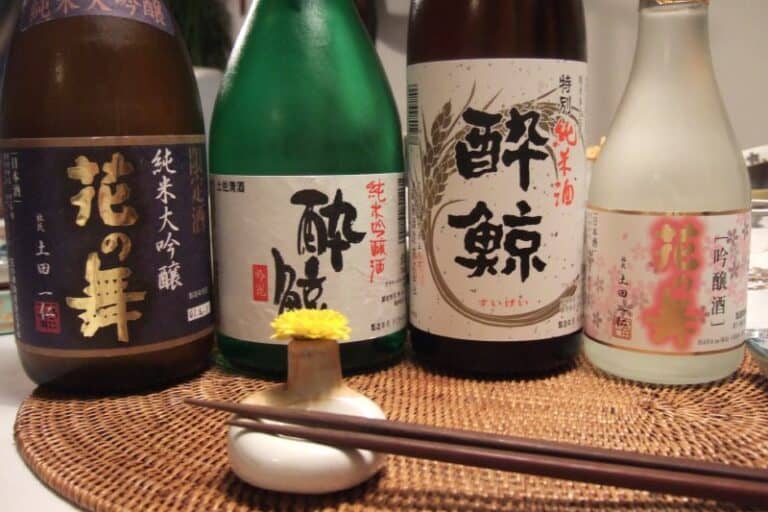
If you remember only one thing from this entire guide, make it this: look for 純米 (junmai) and 吟醸 (ginjo) on the label — everything else builds on recognizing these two.
2. The Rice Polishing Ratio (Seimaibuai)
Somewhere on most premium bottles, you’ll see a number followed by a percent sign, often written as 精米歩合 (seimaibuai) — literally “rice polishing ratio.” This tells you how much of the original rice grain remains after polishing away the outer layers.
Here’s the part that trips people up: a lower number means more polishing, which generally means a more refined (and more expensive) sake. A seimaibuai of 50% means half the rice grain was polished away before brewing; that’s a substantially more labor- and resource-intensive process than a seimaibuai of 70%.
In my experience, this number is one of the fastest ways to compare two unfamiliar bottles side by side when you can’t read anything else on the label — if one says “50%” and the other says “70%,” you at least know which one represents a more refined (and likely pricier) product, even if you can’t read a single kanji character otherwise.
3. Sweet or Dry: The Nihonshu-do Scale
This is the one most travelers wish they’d known about sooner. Japanese sake labels often include a number called 日本酒度 (nihonshu-do), sometimes shown as “SMV” (Sake Meter Value) on English-language labels or shelf tags.
- Positive numbers (+) indicate a drier sake
- Negative numbers (–) indicate a sweeter sake
- Zero is roughly neutral
A nihonshu-do of +6 will taste noticeably drier than one at –3. Niigata sake, in particular, is famous for its tanrei karakuchi (淡麗辛口) style — light and dry — so you’ll often see positive numbers on bottles from this region.
If the label itself doesn’t show this number (many export-focused bottles omit it), check the shelf tag in Japanese liquor shops, since retailers often display it even when the bottle doesn’t.
Two other characters worth recognizing here:
- 甘口 (amakuchi) = sweet style
- 辛口 (karakuchi) = dry style
These two words appear constantly in shop displays and tasting notes, even when the numeric nihonshu-do isn’t shown.
4. Brewery Name, Region, and Bottling Date
Finding the brewery name
This is usually the largest, most stylized text on the label — often in a calligraphy font that’s hardest to read for a beginner, ironically because it’s the most decorative. If you’re trying to match a bottle to a specific recommendation (say, from a comparison guide), your best bet is to photograph the label and use a translation app’s camera feature rather than trying to sound out the calligraphy yourself. Handwritten-style brush fonts are genuinely difficult even for many Japanese readers unfamiliar with a specific brewery.
Finding the region
Look for a prefecture name in smaller print, often near the brewery address on the back label. For Niigata sake specifically, you’re looking for 新潟 (Niigata) — the two characters that also show up in place names like Niigata City itself.
Reading the bottling date
Japanese dates on sake bottles are typically written in the order year, month, day, and the year is sometimes given in the Japanese era system (令和, Reiwa) rather than the Western calendar. Reiwa 6 corresponds to 2024, Reiwa 7 to 2025, and so on — if you see a small kanji character followed by a number that doesn’t look like a normal year, that’s likely what’s happening. For most sake, freshness matters less than with fresh produce, but if you’re choosing between two bottles of the same style, the more recently bottled one is generally the safer pick, especially for unpasteurized (nama) sake.
Bonus: A Few More Characters Worth Recognizing
| Kanji | Reading | Meaning |
|---|---|---|
| 生 | nama | Unpasteurized — fresher, more delicate, needs refrigeration and quicker drinking |
| 樽 | taru | Cask-aged, sometimes in cedar — gives a distinct woody aroma |
| 発泡性 | happousei | Sparkling |
| 無濾過 | muroka | Unfiltered — often richer, more textured |
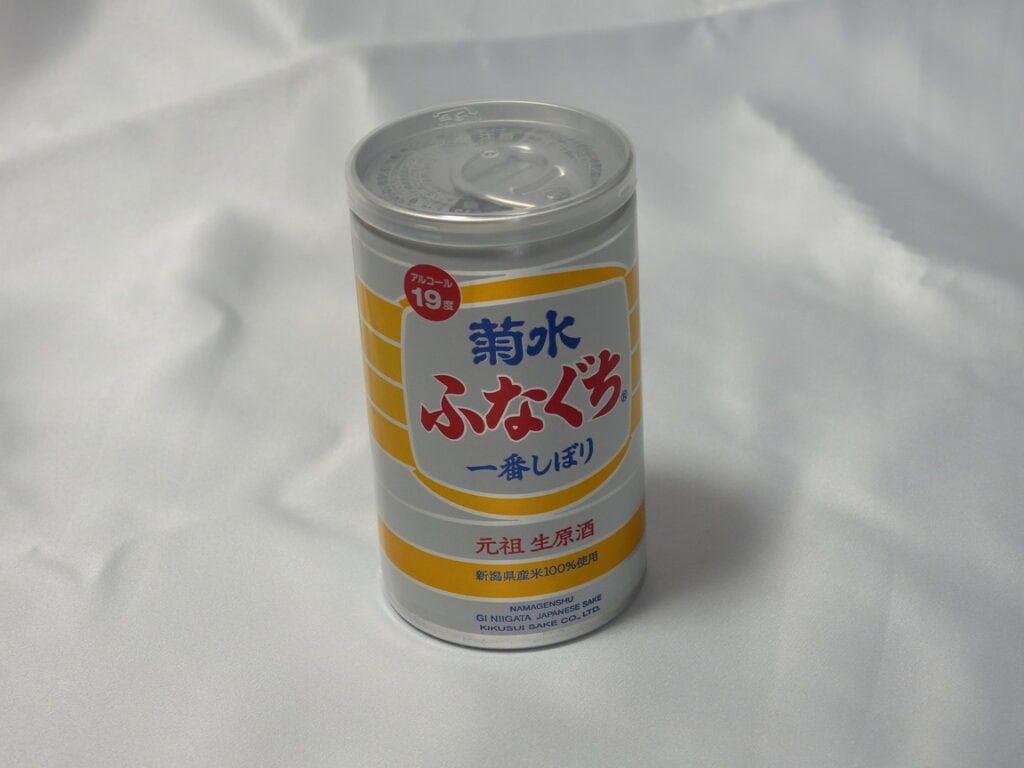
| 原酒 | genshu | Undiluted, full-strength sake — usually higher alcohol content than standard bottles |
You don’t need to memorize all of these at once. Even recognizing 生 (nama) and 純米 (junmai) will get you through the vast majority of shopping decisions.
Putting It Into Practice: A Simple Shopping Checklist
Next time you’re in front of an unfamiliar shelf, this is roughly the order I actually go through:
- Look for 純米 (junmai) and/or 吟醸 (ginjo) — this tells you the basic category
- Check for a percentage number (精米歩合) — lower means more refined/polished
- Check for 辛口 or 甘口, or a nihonshu-do number — this tells you sweet vs. dry
- Check the region in small print — if you’re specifically hunting for Niigata sake, look for 新潟
- If in doubt, use your phone’s camera translation on the brewery name and any remaining text you’re unsure about
This isn’t a substitute for actually knowing Japanese, but it covers the practical decisions you’ll actually need to make standing in a shop with limited time.
If you’re shopping specifically for a gift rather than your own enjoyment, this pairs well with my full comparison of five well-known Niigata sake brands — The Niigata Sake Gift Guide: 5 Bottles Worth Bringing Home — which goes through specific bottles, price ranges, and who each one makes the best gift for.
I’m also working on a guide to Sake Serving Temperatures Explained: When to Chill, When to Warm, since knowing how to read a label doesn’t help much if you then serve a delicate daiginjo piping hot.
Use the Label to Choose and Store a Bottle
Reading the label is the first step; it does not replace the bottle’s storage instructions or tell you exactly how it will taste. Compare junmai, ginjo and daiginjo as buying choices, then use the Niigata sake gift guide to narrow the gift list. Before carrying a bottle home, read how to store sake and check the specific producer’s instructions.
Conclusion
You don’t need fluency to shop for sake confidently — you need about a dozen recurring characters and a general sense of what they’re telling you. Once 純米, 吟醸, and a percentage number stop looking like abstract symbols and start looking like actual information, the whole shelf gets a lot less intimidating. In my experience, most of the “insider knowledge” around sake really is just recognizing the same handful of words over and over — it just takes someone pointing them out once.
Next time you’re standing in front of that wall of bottles, you’ll actually be able to tell which one is which.
Decode the production terms, too
Once you recognize the main label, compare nigori, namazake and genshu to distinguish cloudiness, pasteurization and dilution. These terms can appear together, so check storage instructions and the stated ABV rather than treating them as quality grades.