Nigori vs Namazake vs Genshu: What These Sake Labels Actually Mean
Affiliate disclosure: As an Amazon Associate I earn from qualifying purchases. This article contains affiliate links; purchases may earn a commission at no extra cost to you.
Nigori describes a cloudy sake style, namazake means unpasteurized sake, and genshu refers to sake that has not undergone the usual water dilution. These are different production choices. A bottle can be nigori, nama and genshu at the same time; the words are not competing quality grades.
Read each word as a different question
| Term | Question it answers | What it does not guarantee |
|---|---|---|
| Nigori / にごり | Does the sake retain fine solids that make it cloudy? | Sweetness, low alcohol or absence of pasteurization |
| Namazake / 生酒 | Has the sake been pasteurized? | Cloudiness, a fixed flavor, or that every bottle is sparkling |
| Genshu / 原酒 | Has the usual dilution with water been omitted? | One universal alcohol level, sweetness or a particular serving temperature |
The Japan Sake and Shochu Makers Association glossary distinguishes these terms. Use them as label-reading clues, then check the bottle’s ABV, storage instructions and producer description.
Nigori: cloudy does not necessarily mean sweet
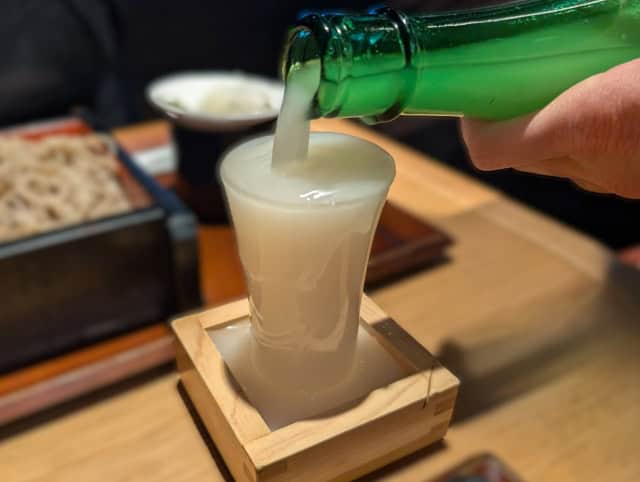
Nigori retains fine rice-derived material and is typically cloudy. Calling it simply “unfiltered” can be misleading: the coarse separation involved differs from saying nothing has been removed. Products vary in texture and sweetness, so a cloudy appearance is not a dessert-style guarantee.
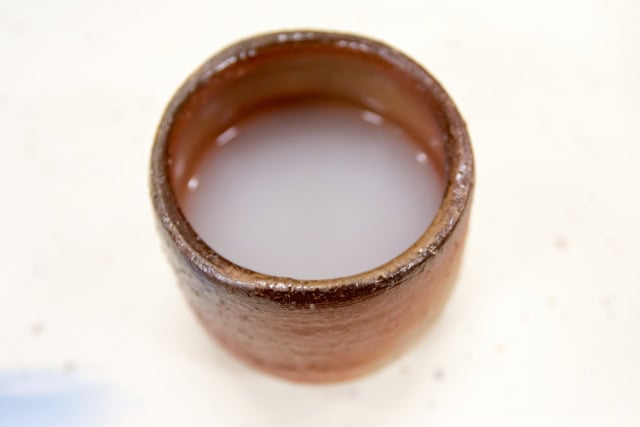
Before mixing settled solids, read the opening instructions. Do not shake a sparkling or actively fermenting bottle; it may foam over. A non-sparkling product may recommend gentle redistribution, but the label should take priority over a universal swirl instruction.
Namazake: storage is part of the purchase
Namazake has not been pasteurized. Plan for the producer’s cold-storage instructions when buying and transporting it; do not leave that decision until after the gift arrives. Ask the seller about appropriate shipping and storage if the information is missing.
Do not assume every product containing the word “nama” has the same treatment. Namachozo and namazume refer to different pasteurization timings. The full label is more informative than a shortened shop description. A recommended drinking window also depends on the product and whether it has been opened.
Genshu: read the ABV rather than guessing
Genshu often has a higher alcohol content than a diluted sake, but the word does not promise 18–20% ABV. The actual label controls the comparison. A lower-alcohol genshu is not a contradiction merely because fermentation produced a different strength.
Ice can change the concentration and temperature of a pour, but it is a preference rather than a requirement of the term genshu. Begin with the maker’s serving recommendation. Avoid describing every example as spirit-like or automatically suitable for a heavy meal.
An example label decoded
On a hypothetical “junmai ginjo nama genshu” label, junmai ginjo identifies one set of production characteristics, nama tells you it is unpasteurized, and genshu tells you about dilution. None of those words alone tells you the exact sweetness or storage life. If “nigori” appears too, it adds information about the cloudy style rather than replacing the other terms.
| Before checkout | Why it matters |
|---|---|
| Read the stated ABV | Genshu is not a numerical strength guarantee |
| Check refrigeration and shipping guidance | Especially important when choosing an unpasteurized gift |
| Check sparkling/opening warnings | A cloudy bottle should not automatically be shaken |
| Read the producer’s flavor description | Cloudiness and strength do not determine sweetness |
Build the rest of your label-reading skills
Use the Japanese sake label guide to connect these terms with the rest of the bottle. For gifts, the Niigata sake guide provides a separate buying context. This article is an explanation of production terms, not a comparative tasting of specific bottles.
Buying, storing and pairing: what to do next
Before taking an unpasteurized bottle home, use our sake storage guide to check transport and refrigeration. For dinner, use the sake and food pairing guide after reading the producer’s flavor description. Storage guidance should follow the actual product, as explained by the Japan Sake and Shochu Makers Association.
Frequently asked questions
Can sake be both nigori and namazake?
Yes. Cloudiness and pasteurization describe different production choices. Check the full label for both terms.
Does genshu mean it should be served neat?
No. The term describes dilution during production, not a mandatory serving method. Read the bottle’s ABV and serving guidance.
Is nigori always sweet?
No. Check the producer’s description rather than inferring sweetness from its appearance.