Tetsubin vs Cast Iron Teapot: Which One Can You Heat?
Affiliate disclosure: As an Amazon Associate I earn from qualifying purchases. Product links below lead to Amazon.com.
Tetsubin vs cast iron teapot is primarily a choice between heating water and brewing tea. Check the exact model: a similar shape does not mean the two vessels can be used in the same way.
Choose a tetsubin when you want a water-heating kettle and can follow its specific heat-source and care instructions. Choose an enamel-lined teapot when you want to steep loose-leaf tea using water heated separately.
Tetsubin vs cast iron teapot: the key differences
OIGEN distinguishes its iron kettles from enamel-lined iron teapots. Its collection explains the different purposes rather than treating all cast iron tea vessels as interchangeable. Use this distinction as a starting point, then check the manual for the particular item you are considering.
| Buying question | Water-heating kettle | Tea-brewing pot |
|---|---|---|
| What should the listing establish? | Permission to heat water | Instructions for adding already-heated water |
| Is stovetop use automatic? | No: check the supported heat source | Do not assume it is allowed |
| What capacity matters? | Recommended working fill | Tea needed for one serving round |
| What should accompany it? | Model-specific operating instructions | Brewing and coating-care instructions |
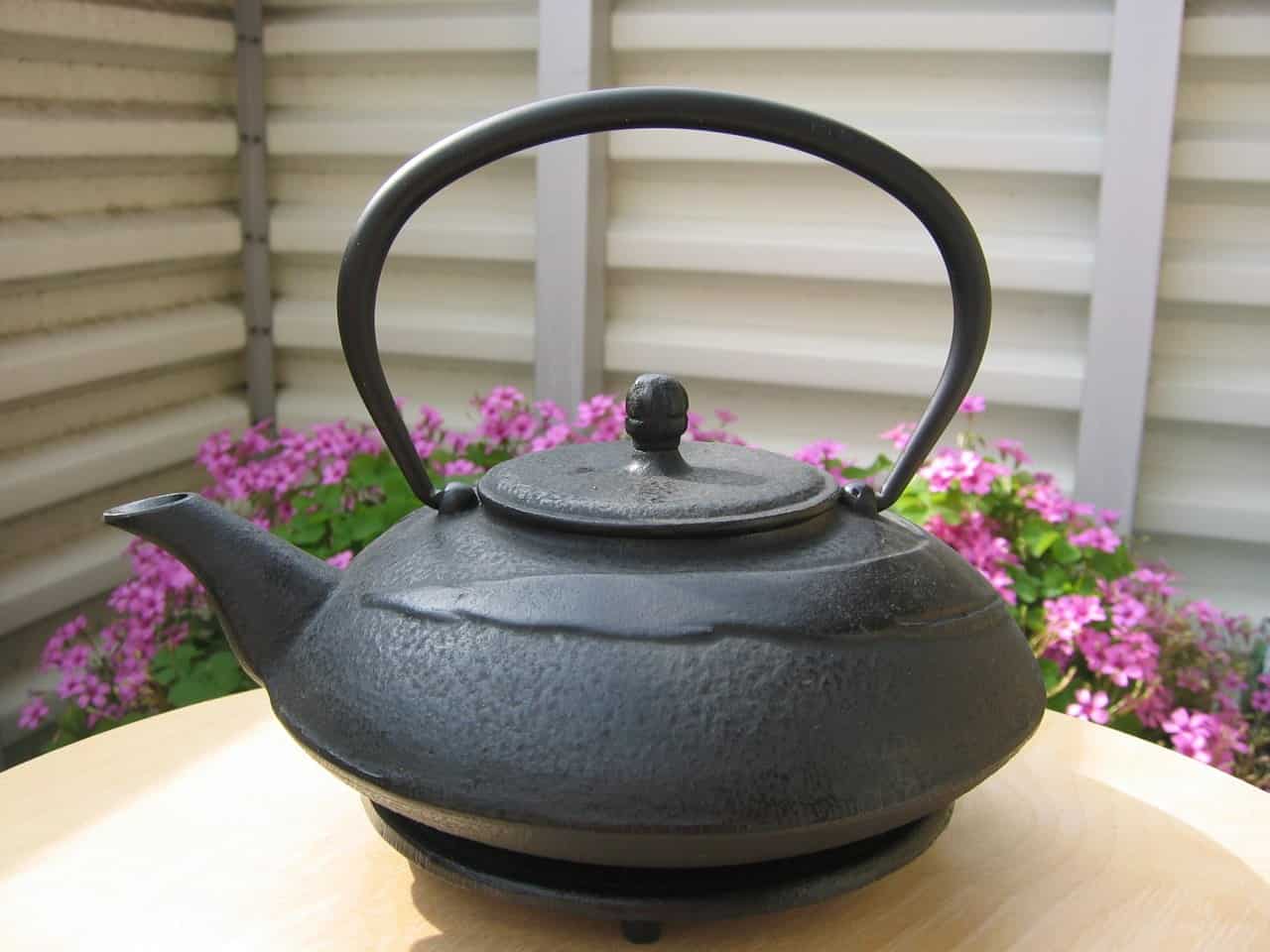
Confirm the exact heat source
A kettle described as suitable for gas is not automatically approved for induction. Ask for written compatibility with your hob, including any minimum base diameter requirement. A seller's generic answer about “cast iron working on induction” does not establish that a particular kettle is suitable.
If the listing is unclear, choose a documented model instead of planning to experiment. The same applies to a used vessel with an unidentified interior. A photograph may help a manufacturer identify it, but appearance alone cannot verify its condition or intended use.
A listing check before you buy a cast iron tea vessel
Ask for the model number and instructions that answer your intended use. “Japanese cast iron teapot” is a search label, not a heat-source approval. A removable infuser and an attractive finish do not establish stovetop suitability.
| Evidence in the listing | What you can conclude | What is still needed |
|---|---|---|
| Enamel-lined brewing pot with an explicit no-stovetop instruction | Heat the water in a separate kettle. | Serving capacity and coating-care instructions. |
| Water kettle with approval for a named heat source | Consider it for that specified source. | Working fill, empty weight and any hob restrictions. |
| “Induction compatible” without a model or manual | The claim is not detailed enough for a purchase decision. | A matching maker specification and your hob’s requirements. |
| Used or unidentified vessel | A photograph cannot establish its intended use or condition. | Identification and advice from the maker or a knowledgeable seller. |
A useful seller enquiry is: “Please confirm the maker and model, whether this is a water kettle or an enamel-lined brewing pot, approved heat sources, recommended working fill and the care instructions supplied.” If the answer is only a generic statement about cast iron, choose a better-documented product.
For the Iwachu enamel-lined teapot example below, the maker’s care instructions prohibit direct flame, microwaves and dishwashers. They call for washing and drying after use and avoiding abrasives on the enamel. Do not apply an unlined kettle’s care routine to that pot. These instructions are specific to Iwachu’s teapots; follow the manual for another model.
Check weight and working capacity together
Compare the empty weight with the amount of water you expect to lift. One litre of water adds approximately one kilogram, before allowing for the vessel itself. As a planning example, a 1.5 kg kettle containing 0.8 litres of water would weigh roughly 2.3 kg. These are example numbers, not specifications for an OIGEN product.
Measure the space where the handle will sit and where you will put the hot vessel down. For a gift, these practical questions may matter more than decoration. A smaller, well-documented pot can be a better fit than a large kettle that the recipient finds uncomfortable to lift.
Buying from outside Japan
For readers in the US, UK, Australia or Canada, compare local stock with direct import on the same basis: exact model, delivery cost, applicable taxes, return destination and warranty support. Ask whether the seller supplies an English care sheet. Do not treat a low headline price as the total delivered cost.
Before paying, save the model name and the manufacturer's heat-source instructions. If the retailer's description conflicts with the maker's manual, resolve that discrepancy first.
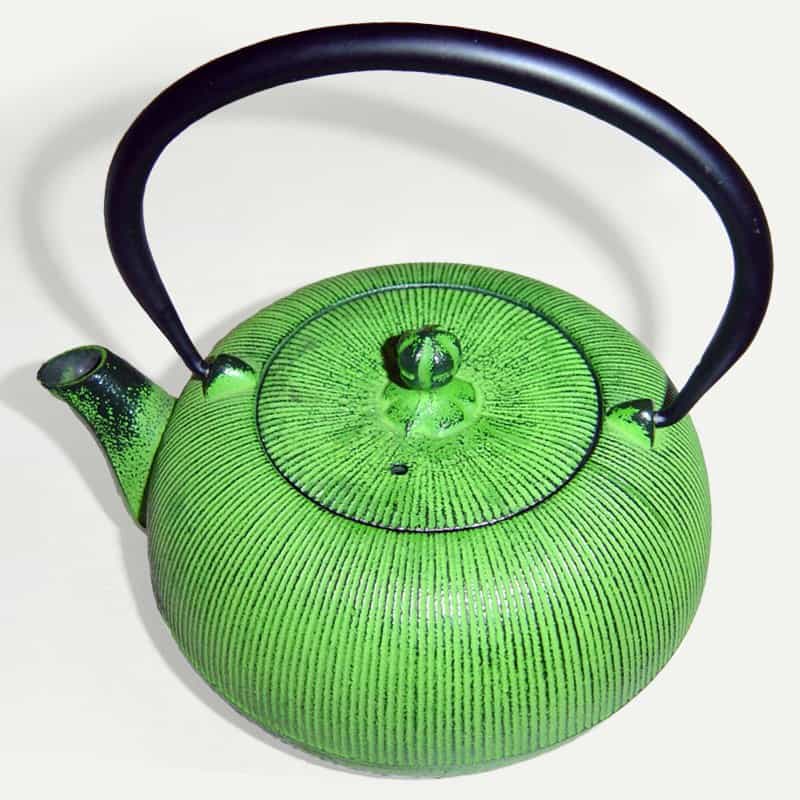
Which one fits your routine?
If you already have a convenient electric kettle and mainly want to brew leaf tea, start by comparing brewing pots. If the water-heating ritual itself appeals to you, investigate tetsubin models that fit your kitchen and care routine. Neither purchase is necessary for enjoying Japanese tea.
For the tea itself, use our guide to Japanese tea styles. A matcha preparation setup serves a different purpose; see the tools used to make matcha before combining purchases.
Frequently asked questions
Can an enamel-lined teapot go on the stove?
Do not use it on a stove unless the manufacturer explicitly permits that use for the exact model. A tea-brewing pot is normally filled with water heated separately. If the listing calls the same item both a kettle and a teapot, ask the seller to clarify before ordering.
What should I ask when buying one as a gift?
Ask whether the recipient wants to heat water or brew loose-leaf tea, which hob they use, and how much weight they can comfortably lift. Include the model-specific care leaflet. These details are more useful than choosing solely by colour or decoration.
Editorial approach: This guide uses the manufacturer or operator sources linked above. It is not a hands-on review. Confirm the current instructions for the exact product before purchasing.
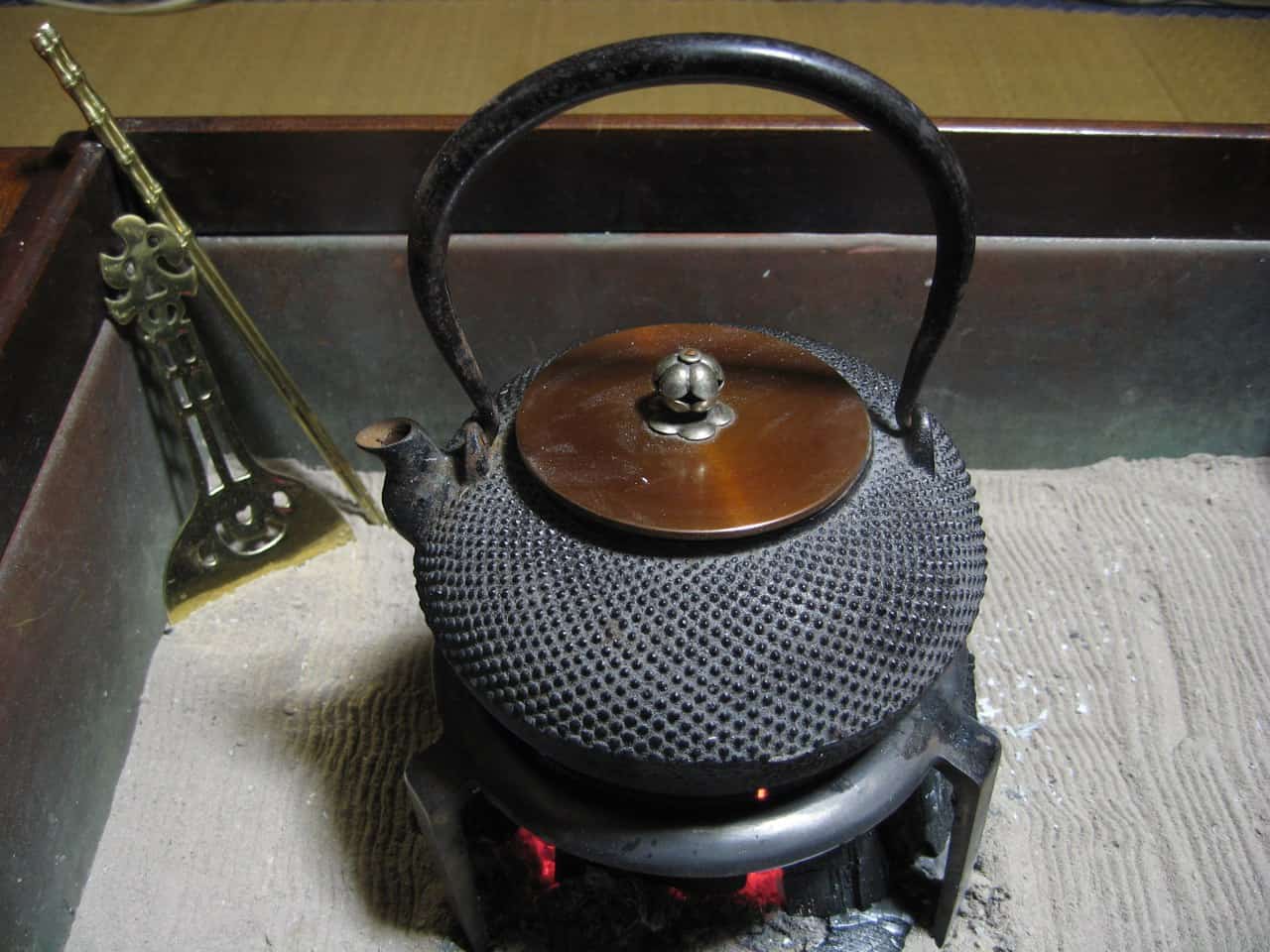
Featured image: Photo: サフィル / Wikimedia Commons, CC BY-SA 4.0. Proportional resizing/compression only; no content edits. Illustrative photograph; not the linked product.