Best Knife Storage: Blocks vs. Magnetic Strips vs. Saya
Affiliate disclosure: As an Amazon Associate I earn from qualifying purchases. This article contains affiliate links; purchases may earn a commission at no extra cost to you.
Where You Put the Knife Matters Almost as Much as How You Sharpen It
If you’ve read my guide to sharpening and caring for a Japanese knife, you already know that “store it so the edge doesn’t touch anything” was one of the core daily habits I recommended, without going into detail on how. The best knife storage isn’t really about which option looks nicest on the counter — it’s about which one actually protects the edge, keeps the blade dry, and stays clean enough to handle food safely. Get storage wrong, and you can undo a good chunk of the sharpening work covered in that guide within a few weeks.
In my experience, this is a purchase people think about far less than the knife itself, which is backwards — a knife stored loose in a drawer will dull noticeably faster than the same knife on a well-chosen strip or in a well-chosen block, independent of how good your sharpening technique is.
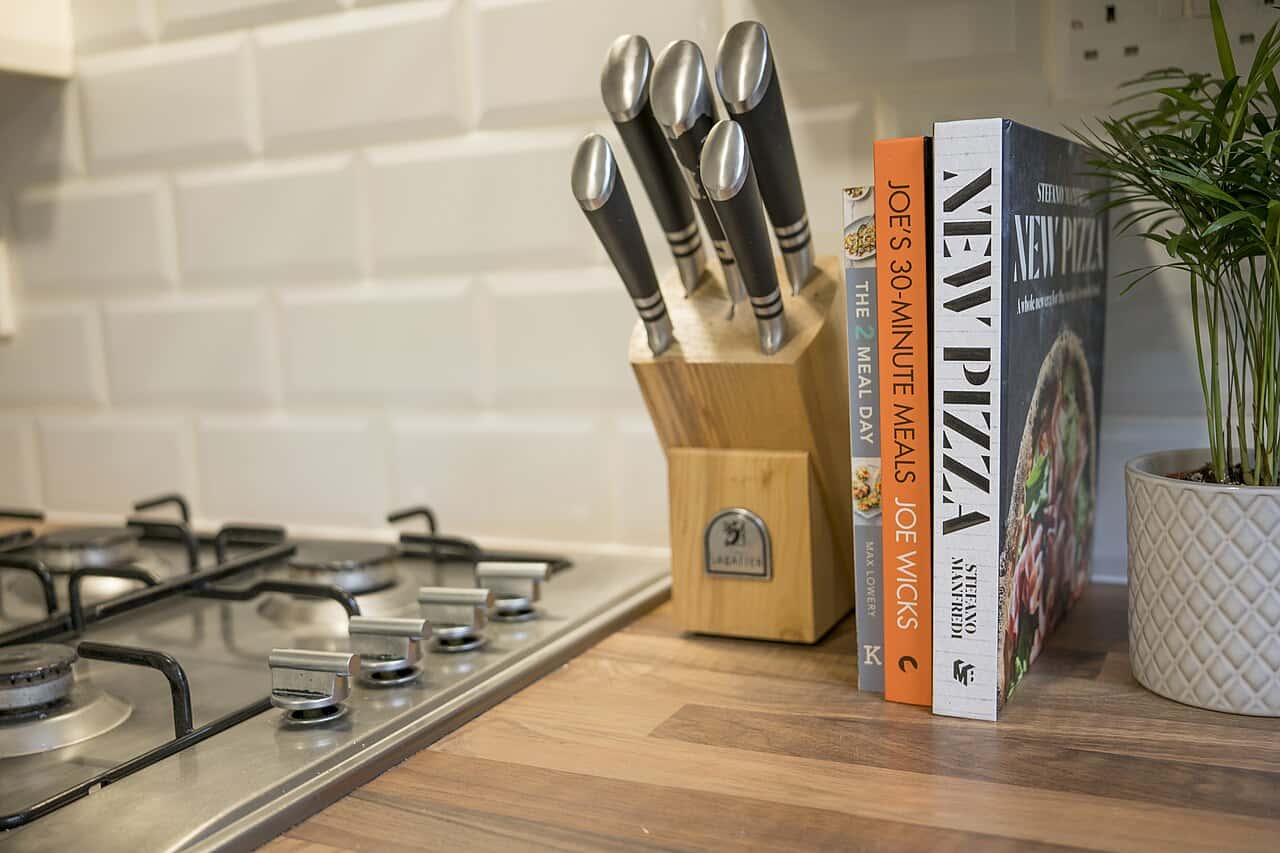
Knife Block: The Familiar Countertop Option
How it works: A solid block of wood with slots — vertical, angled, or horizontal — that each knife slides into.
Pros: Instant access, each knife kept separate from the others so blades never touch, classic kitchen aesthetic that most people already recognize.
Cons: Fixed slot sizes mean a new knife with an unusually wide or long blade may not fit properly. Vertical slots put continuous downward stress on a resting blade over time; horizontal slots are gentler and preferable if you can find one. Wet blades stored in the block deposit moisture into the wood, and that moisture doesn’t always dry out fully overnight, which is a real concern for carbon steel blades covered in my knife steel guide.
Best for: Someone with a fixed, matched set of knives (rather than a growing collection of different sizes) and enough counter space to spare.
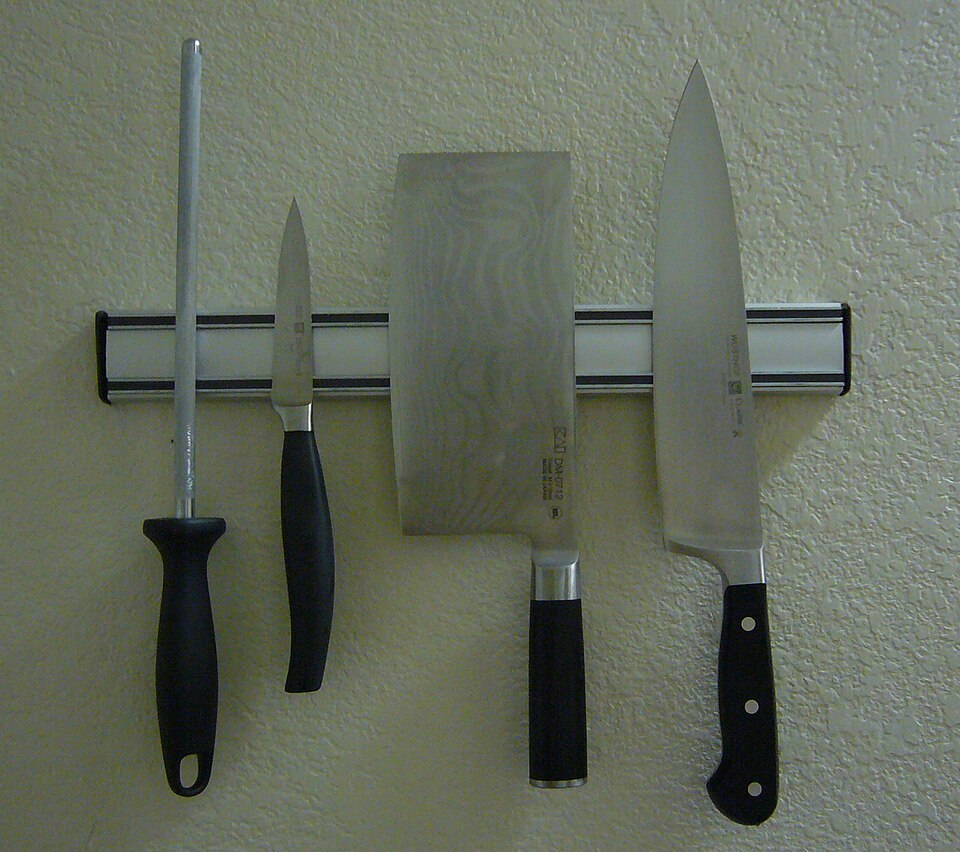
Photo: Kent Wang from Austin, TX, USA / Wikimedia Commons · CC BY-SA 2.0. Resized/compressed; no content edits.
Magnetic Strip: The Modern, Space-Saving Option
How it works: A wall-mounted wooden bar with embedded magnets that hold knives by the flat of the blade.
Pros: No blade-to-anything contact beyond the flat face, which means no edge damage. Knives are visible and instantly identifiable rather than hidden in slots. Easy to wipe down and keep clean. Frees up counter space entirely.
Cons: Requires wall mounting, which isn’t always practical in a rental or a kitchen without a clear stretch of wall near the prep area. Magnets put stress on the tang when a knife is removed, which matters more for partial-tang knives than full-tang ones (most quality Japanese knives are full-tang, so this is a smaller concern than it might sound). Choose a strip with a wood or leather-covered magnetic surface rather than bare metal — this protects the blade edge from small chips during placement and removal.
Best for: A growing or mismatched knife collection, smaller kitchens where counter space is scarce, or anyone who wants knives visible rather than tucked away.
Saya: The Individual Blade Sheath
How it works: A form-fitted wooden (typically magnolia or similar softwood) sheath that slides over a single blade, sized specifically to that knife’s shape.
Pros: The best available protection for a single blade, especially for transport or drawer storage — a bare blade dropped loose into a drawer chips on contact with other utensils almost immediately, while a saya prevents this entirely. Genuinely necessary if you want to store knives in a drawer rather than on a counter or wall.
Cons: Each saya is sized to a specific knife, so a collection of different blade shapes needs a matching sheath for each one — this adds up in cost and isn’t as simple as buying one universal solution. Moisture trapped inside a saya on a blade that wasn’t fully dried before sheathing can promote rust, particularly on carbon steel; make sure the blade is completely dry before sliding it into a saya.
Best for: Anyone who wants or needs to store knives in a drawer, or who travels with a knife and needs individual protection during transport.
Quick Comparison
| Storage Type | Edge Protection | Space Required | Best For |
|---|---|---|---|
| Knife Block | Good (horizontal slots better than vertical) | Counter space | Fixed, matched knife sets |
| Magnetic Strip | Excellent (no edge contact) | Wall space only | Growing or mismatched collections |
| Saya | Excellent (single blade) | Minimal, fits in a drawer | Drawer storage or transport |
What to Avoid Regardless of Method
- Never store a bare blade loose in a drawer — this is the single worst option across every guide on the subject, causing chips from contact with other utensils and posing a real hand-injury risk when reaching in
- Never stack knives directly on top of each other in any storage method, even briefly during cleanup
- Avoid bare metal magnetic strips without a wood or leather-covered face, since metal-on-metal contact during placement can chip a fine edge
Can You Combine Methods?
Absolutely, and many serious home cooks do. A common setup covered by knife specialists is a magnetic strip for daily-use knives paired with a saya for a carbon steel blade that needs extra rust protection, or a block for a starter set with a magnetic strip added later as the collection grows. There’s no rule that says you need to pick exactly one system — match the storage to each knife’s actual needs.
Conclusion
The best knife storage genuinely depends on your kitchen layout and collection more than any single “correct” answer — a magnetic strip protects the edge best and suits a growing collection, a block offers familiar convenience for a fixed set, and a saya is close to mandatory if a drawer is your only realistic option. Whatever you choose, the one universal rule is simple: never let a bare blade touch anything else, including other knives, without protection.
If you haven’t worked through the rest of the care routine, my guide to sharpening and caring for a Japanese knife and Japanese knife steel guide round out what’s worth knowing to keep a good knife performing well for years.