Sake Serving Temperatures Explained: When to Chill, When to Warm
Affiliate disclosure: As an Amazon Associate I earn from qualifying purchases. This article contains affiliate links; purchases may earn a commission at no extra cost to you.
The Problem: You Have a Nice Bottle and No Idea What to Do With It
So someone brought you back a bottle of sake from Japan — maybe one of the Niigata bottles from my gift guide comparing Kubota, Hakkaisan, and others — and now it’s sitting on your counter. You know sake can apparently be served cold, warm, or at room temperature, but nobody told you which one applies to your bottle, and you’re mildly terrified of serving a $70 daiginjo the wrong way.
I get it. In my experience, this is one of the most common questions I get from friends who’ve received sake as a gift: “wait, am I supposed to heat this up?” The honest answer is: sometimes yes, sometimes definitely not, and the difference actually matters quite a bit for how the sake tastes.
The good news is that the logic behind sake temperature isn’t arbitrary. Once you understand the basic principle, you can make a reasonable guess even without any label information at all.
The Core Principle: Delicate Aromas Want Cold, Rice Character Wants Warmth
Before the specific temperature names, here’s the one rule that explains almost everything else in this guide:
The more fragrant and delicate a sake is, the more cold tends to suit it. The more rice-forward and robust a sake is, the more it can handle — and often benefit from — gentle warming.
This is why a daiginjo, with its delicate floral aroma, is almost always served chilled — warming it would blow off the very fragrance you paid for. Meanwhile, a fuller-bodied junmai or honjozo can take a bit of heat, which softens sharp edges and brings out a rounder, more savory character.
The Full Temperature Scale (With Japanese Names)
Japanese drinking culture actually has named temperature zones for sake, each with its own term. (The National Research Institute of Brewing, Japan’s official brewing research body, publishes a helpful English-language reference on these terms and recommended serving temperatures.) You don’t need to memorize all of these…
| Japanese Term | Approx. Temperature | English Description |
|---|---|---|
| 雪冷え (yukibie) | ~5°C (41°F) | “Snow-chilled” — very cold, refrigerator temperature |
| 花冷え (hanabie) | ~10°C (50°F) | “Flower-chilled” — cold, but slightly less than fridge temp |
| 涼冷え (suzuhie) | ~15°C (59°F) | “Cool” — a light chill, similar to a cellar-temperature white wine |
| 冷や / 常温 (hiya / joon) | ~20°C (68°F) | Room temperature |
| 日向燗 (hinatakan) | ~30°C (86°F) | “Sun-warmed” — just barely above room temperature |
| 人肌燗 (hitohadakan) | ~35°C (95°F) | “Skin-temperature” — close to body heat |
| ぬる燗 (nurukan) | ~40°C (104°F) | “Lukewarm” — a gentle, comfortable warmth |
| 上燗 (jokan) | ~45°C (113°F) | “Warm” — noticeably hot but not sharp |
| 熱燗 (atsukan) | ~50°C (122°F) | “Hot” — the classic izakaya hot sake temperature |
| 飛び切り燗 (tobikirikan) | ~55°C+ (131°F+) | “Extra hot” — used mostly for robust, inexpensive table sake |
If this looks like a lot, here’s the shortcut: most people only ever need to distinguish between three zones — chilled (5–15°C), room temperature (around 20°C), and warmed (35–50°C). The finer distinctions matter more to sake enthusiasts than to someone deciding how to serve a gift bottle tonight.
Matching Temperature to Sake Style
Here’s how this actually applies to the kinds of bottles you’re likely to be holding.
Serve chilled (5–15°C)
- Daiginjo and Ginjo — their signature aroma is fragile and easily lost to heat
- Nama (unpasteurized) sake — chilling also helps preserve freshness and prevents further fermentation in the bottle
- Sparkling sake — treat it like champagne
Serve at room temperature (around 20°C)
- Standard Junmai, if you want to taste its full rice character without either dulling it with cold or intensifying it with heat
- A safe default if you genuinely don’t know anything else about the bottle and don’t want to risk over- or under-serving it
Serve warmed (35–50°C)
- Honjozo and standard-grade Junmai — warming softens acidity and brings out a rounder, more comforting character
- Older or slightly harsher sake — warming was traditionally used to smooth out rougher edges, which is part of why inexpensive table sake is so often served hot
- Cask-aged (樽, taru) sake — the woody notes hold up well to warmth
In my experience, if I’m ever unsure and the bottle doesn’t specify, I default to serving junmai and honjozo very lightly warmed (around nurukan, roughly 40°C) rather than hot — it’s a forgiving middle ground that rarely disappoints, whereas serving a delicate ginjo hot is a mistake you can’t really undo once it’s in the cup.
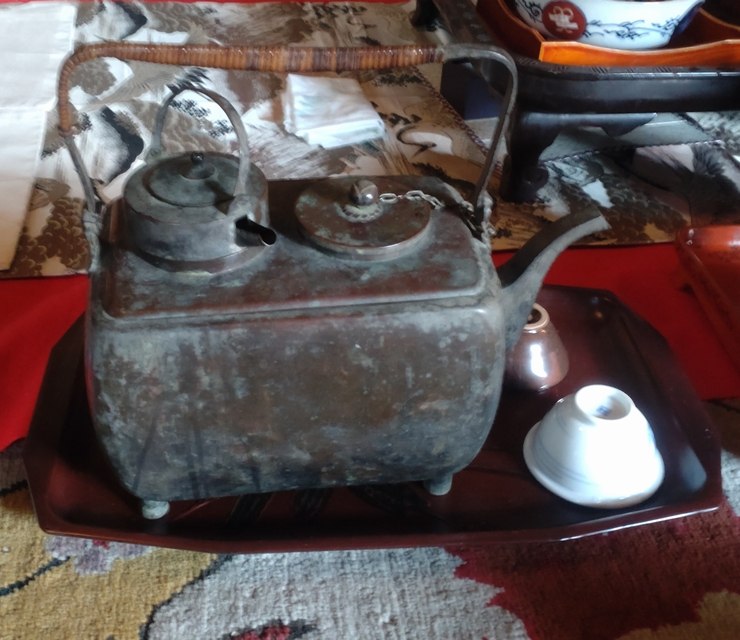
Photo: User:逃亡者 (ja:利用者:逃亡者) / Wikimedia Commons · Public domain. Resized/compressed; no content edits.
How to Actually Warm Sake at Home
If you’ve decided your bottle deserves a gentle warming, here’s the traditional method, plus a realistic shortcut.
The traditional way (tokkuri and hot water bath)
- Pour sake into a tokkuri (a narrow ceramic sake flask) — if you don’t have one, any small heatproof carafe works
- Heat a pot of water until it’s hot but not boiling (around 60–70°C / 140–160°F)
- Place the tokkuri in the hot water for a few minutes, checking the temperature periodically
- Aim for your target zone (35–50°C) rather than guessing — a simple kitchen thermometer makes this much easier than eyeballing it
The realistic shortcut (microwave)
Purists will wince, but a microwave works in a pinch, especially for everyday sake rather than a special-occasion bottle. Warm in short 10–15 second bursts, stirring or swirling between each, and check the temperature as you go — sake heats unevenly in a microwave, and overshooting into “too hot” territory flattens the flavor fast. I’d reserve this method for casual weeknight sake rather than anything you were specifically gifted for a special occasion.
What to avoid
- Don’t warm anything labeled daiginjo or ginjo — you’ll lose the aroma that makes it special
- Don’t reheat sake that’s already been warmed once and cooled — the flavor degrades noticeably on a second pass
- Don’t boil it — beyond roughly 55°C, you start cooking off alcohol and flattening the flavor rather than enhancing it
Quick Reference: What to Do With a Gift Bottle
If someone just handed you a bottle and you want the fastest possible answer:
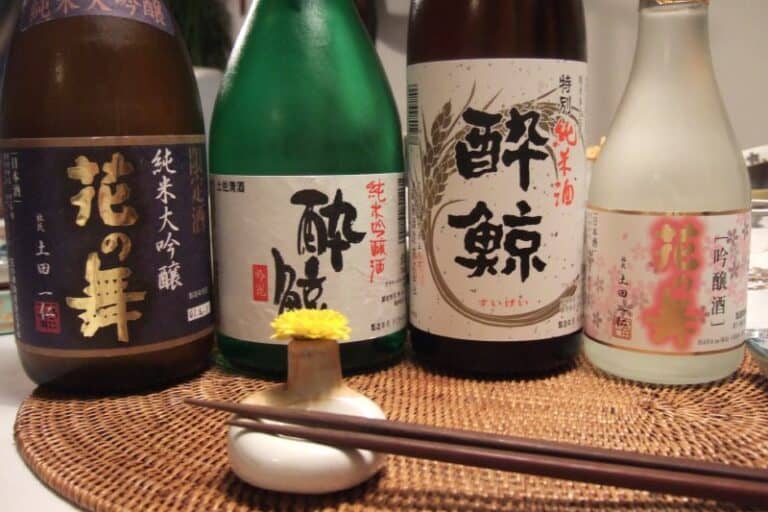
- Check the label for 純米大吟醸, 大吟醸, or 吟醸 → serve it cold
- See 純米 or 本醸造 alone, without “ginjo” → room temperature or lightly warmed both work; try room temperature first
- No idea what any of it means → serve chilled as the safer default. It’s much easier to accidentally ruin a good sake by over-warming it than by serving it slightly too cold
If you want help identifying which category your specific bottle falls into, my guide on how to read a Japanese sake label without speaking Japanese walks through exactly which characters to look for.
A Note on “Correctness”
It’s worth saying: none of this is really about strict rules you’ll be judged on. Sake temperature preferences vary by region, generation, and personal taste within Japan itself — there’s no single “correct” way that overrides your own enjoyment. The guidance above reflects what tends to bring out the best in each style, but if you genuinely prefer your junmai ice-cold or your ginjo at room temperature, that’s a legitimate preference, not a mistake. Think of this more as a well-informed starting point than a rulebook.
Conclusion
The short version: cold protects delicate aromas, warmth softens and rounds out rice character, and when in doubt, chilled is the safer default for anything you’re not sure about. In my experience, most people overthink this far more than necessary — once you know whether your bottle leans delicate (ginjo/daiginjo) or robust (junmai/honjozo), the rest mostly takes care of itself.
Next time someone hands you a bottle from a trip to Japan, you’ll actually know what to do with it instead of just guessing.