Sake and Food Pairing Guide: What Actually Goes With What
Affiliate disclosure: As an Amazon Associate I earn from qualifying purchases. This article contains affiliate links; purchases may earn a commission at no extra cost to you.
Why Sake Pairing Isn't Just "Drink It With Sushi"
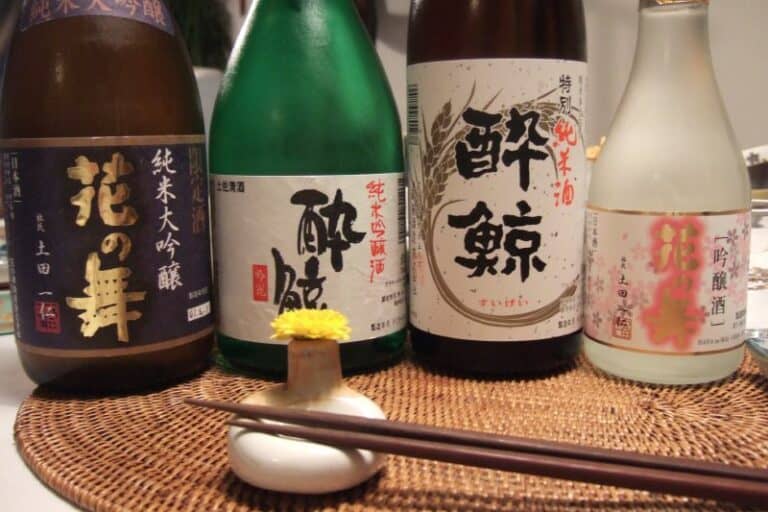
If you've read my guide to Junmai vs. Ginjo vs. Daiginjo, you already know sake styles vary dramatically in body and aroma. What most people don't realize is that this same variation makes sake and food pairing genuinely more flexible than wine pairing — sake's naturally lower acidity and broader umami range mean it complements a wider variety of dishes without the clashing you sometimes get matching wine to Japanese, or frankly any, cuisine.
In my experience, this is exactly the gap between "I know sake exists" and "I know what to actually serve it with." Sushi is the obvious answer, and it's not wrong, but treating sake and food pairing as a one-dish question undersells what these bottles can do at an actual dinner table.
Sake and Food Pairing: Match Weight to Weight
Before getting into specific pairings, the one rule that explains almost everything else: light, delicate sake pairs with light, delicate food; fuller, richer sake pairs with bolder, richer food. This mirrors the same logic covered in my guide to sake serving temperatures — delicate ginjo and daiginjo want food that won't overpower their aroma, while robust junmai can stand up to heavier, more savory dishes.
Pairing by Sake Style
Daiginjo and Ginjo (Light, Aromatic, Delicate)
These fragrant, heavily polished sakes are easily overwhelmed by strong flavors, so the goal is complementing rather than competing.
Pairs well with: Sashimi, delicate white fish, light seafood, chilled tofu (hiyayakko), and simply prepared vegetables. The clean, floral character of a good daiginjo actually enhances the natural sweetness of raw fish rather than masking it.
Try a small pour first: Strong seasoning can obscure delicate aromas, but individual bottles and preferences vary. These are starting points rather than rules.
Junmai (Fuller-Bodied, Rice-Forward)
Junmai's rounder, more savory character handles a much wider range of food than the delicate grades above.
Pairs well with: Grilled meats, yakitori, tempura, richer seafood like grilled eel (unagi), and mushroom-based dishes. The umami-forward character of junmai actually amplifies umami in food — this is the pairing equivalent of "fat plus fat" in Western cooking.
A note on temperature: As covered in my sake serving temperatures guide, junmai served slightly warm pairs especially well with heavier winter dishes like nabe (hot pot) — the warmth rounds out both the sake and the broth simultaneously.
Honjozo (Light-to-Medium, Clean)
A flexible middle ground that works as a genuine food-pairing all-rounder.
Pairs well with: Everyday home cooking — grilled fish, simmered dishes (nimono), and most izakaya-style small plates. This is the sake equivalent of a reliable house red or white — not flashy, but rarely wrong.
Sparkling Sake
Pairs well with: Fried foods (the carbonation cuts through oil similarly to how beer pairs with tempura), light appetizers, and anything you'd otherwise serve with a crisp white wine or prosecco.
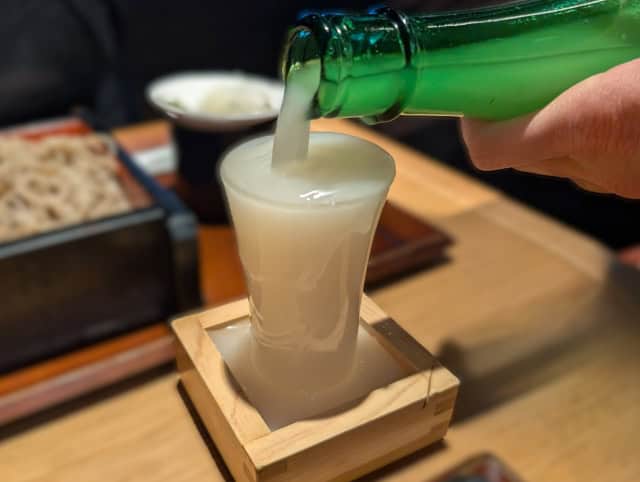
Nama (Unpasteurized) Sake
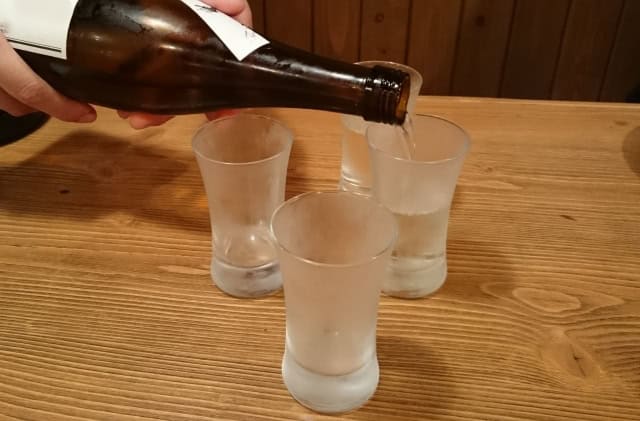
Nama describes pasteurization, not carbonation. Match it to food using the bottle’s actual sweetness, acidity and body; follow its storage instructions.
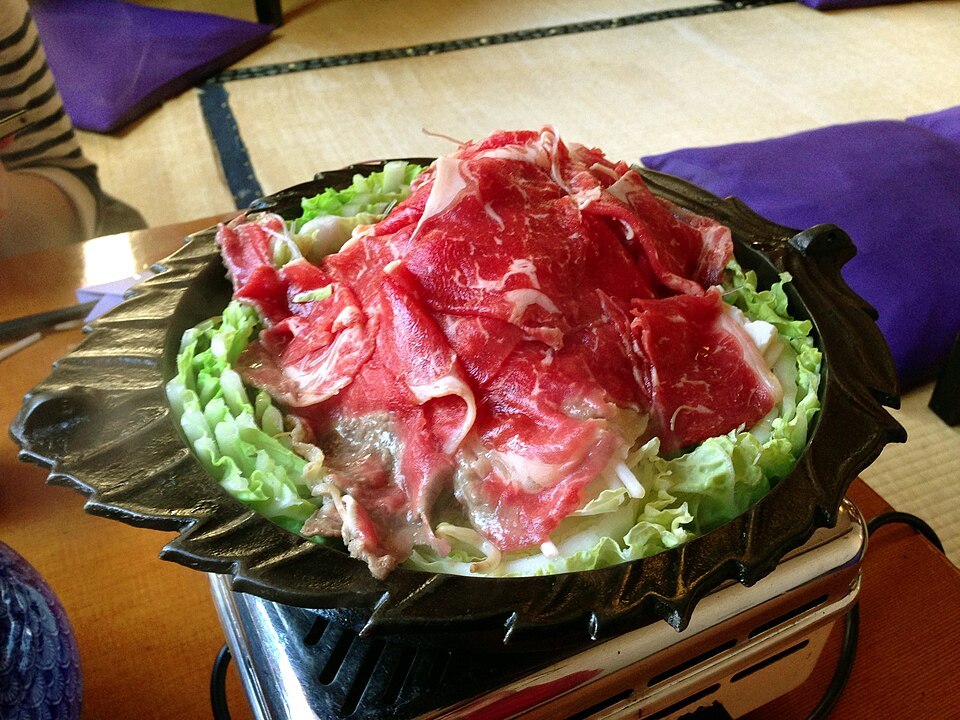
Photo: cyclonebill from Copenhagen, Denmark / Wikimedia Commons · CC BY-SA 2.0. Resized/compressed; no content edits.
Pairing by Cuisine (Beyond Japanese Food)
One of the more useful things I've learned is that sake pairs surprisingly well outside Japanese cuisine entirely, since its lower acidity and umami depth work differently from wine.
- Cheese: Softer, funkier cheeses (brie, soft-ripened varieties) pair better with sake than most people expect — junmai's umami character bridges surprisingly well with dairy fat
- Charcuterie: A robust junmai or honjozo, slightly warmed, holds up well against cured meats
- Spicy food: Try a small pour alongside the dish; sweetness, alcohol level and individual preference matter, and alcohol can make heat feel stronger.
- Roasted vegetables: Root vegetables and anything with caramelized, earthy notes pair naturally with junmai's rice-forward character
A Simple Framework for Your Next Meal
If you're planning a meal around sake rather than picking sake to match a meal already planned, here's the shortcut:
- Decide the meal's weight first — light and fresh, or rich and hearty?
- Light meal → reach for ginjo or daiginjo, served chilled
- Rich, hearty meal → reach for junmai or honjozo, served room temperature or lightly warmed
- Not sure, or serving a mixed spread → a versatile honjozo covers the most ground without any real risk
Conclusion
Sake and food pairing isn't limited to sushi, and it isn't nearly as rigid as wine pairing tends to be treated. The core logic — match delicate sake to delicate food, robust sake to robust food — covers most situations, and sake's naturally low acidity means it plays well with a surprisingly wide range of cuisine well beyond Japan. Next time you're deciding what to serve alongside a bottle, start with the weight of the meal rather than defaulting to raw fish out of habit.
If you're still deciding which bottle to serve, my Niigata sake gift guide and guide to sake grades cover the rest of what's worth knowing before your next dinner.
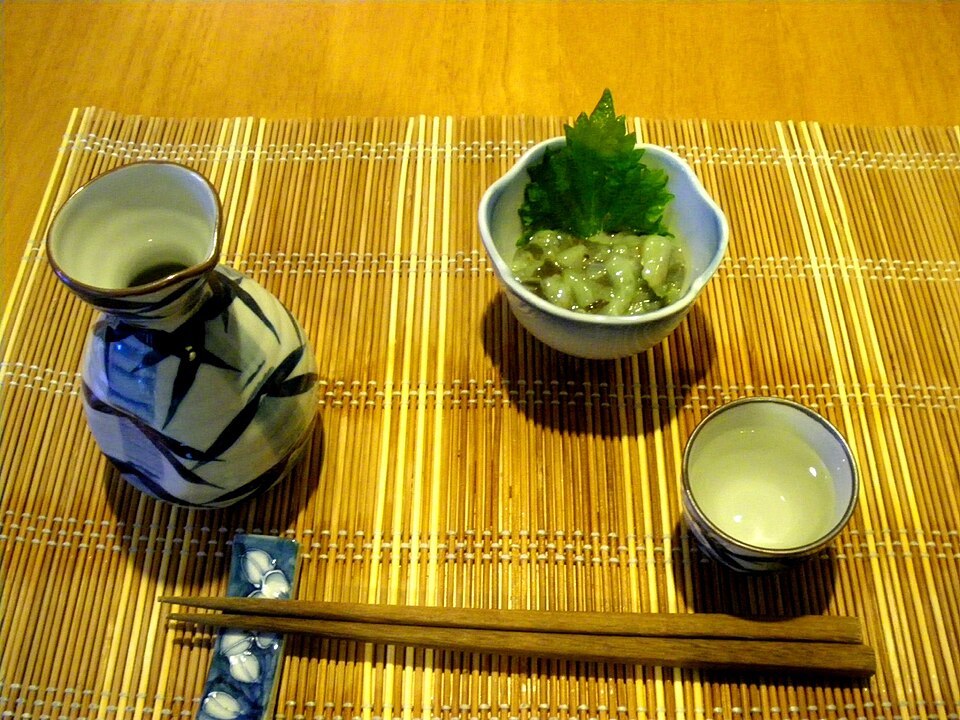
Featured image: Sake flask and cup served beside takowasa, an octopus and wasabi dish. Illustrative photograph. Photo: User:Kentin / Wikimedia Commons · CC BY-SA 3.0. Resized/compressed; no content edits.