Best Japanese Notebooks for Fountain Pens: Tomoe River, Midori MD, and More Compared
Affiliate disclosure: As an Amazon Associate I earn from qualifying purchases. This article contains affiliate links; purchases may earn a commission at no extra cost to you.
Choose a notebook by the exact paper, ruling, size and binding, then test your own nib and ink. Tomoe River is a paper name used in different products; MD Notebook, STALOGY and Campus are notebook ranges. They are not interchangeable specifications.
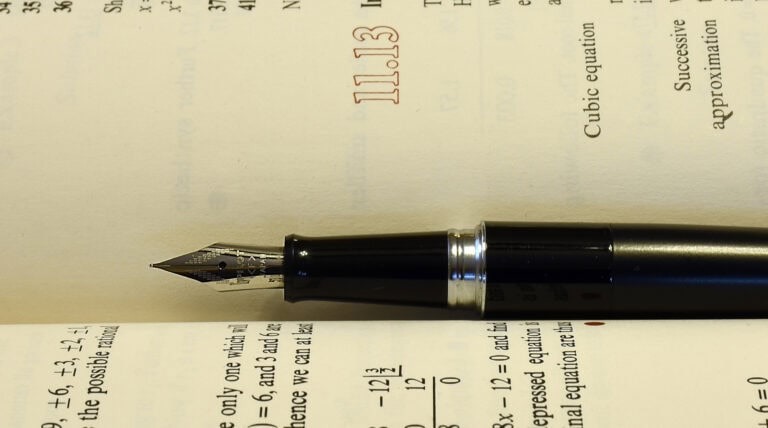
This is a research-based buying guide, not a controlled comparison of ink drying or bleed-through. The photographs are illustrative.
What to check in Japanese notebook paper
Three things separate genuinely good Japanese notebook paper from ordinary paper:
- Feathering resistance — ink stays in a clean line rather than spreading into the paper fibers like a marker on a napkin
- Bleed-through versus show-through: ink soaking through is different from writing visible through thin paper. Check both sides of a sample rather than treating these as the same issue.
- Ink sheen and shading — rather than just soaking the color in flatly, good paper lets certain inks show off their shimmer and color variation, which is part of why ink enthusiasts specifically hunt for the right paper pairing
Photo: Baron Fig baronfig / Wikimedia Commons · CC0 1.0. Resized/compressed; no content edits.
Five Notebooks Worth Actually Buying
Tomoe River — The Benchmark for Ink Shading
Tomoe River is a paper name rather than one notebook model. Check the notebook maker, paper version, weight, size and ruling. Ink appearance and drying depend on the specific paper and your pen; there is no timed test in this guide establishing it as the slowest or best paper.
Best for: Fountain pen and ink enthusiasts who write deliberately, and anyone who wants to see what their ink collection can actually do.
Midori MD Notebook — The All-Around Favorite
MD Notebook is a useful candidate when you want a simple undated notebook. Choose the ruling and size before choosing accessories. MIDORI describes its MD Paper as developed for writing, but that description is not a guarantee for every ink. The brand has also announced a transition from MD PAPER PRODUCTS to MD PRODUCT; check the exact product code when comparing old and new listings.
Best for: Someone who wants one genuinely excellent, versatile notebook rather than a specialist paper for one specific use case — this is the “if you only buy one” recommendation for most people.
Stalogy 365 Days — The Bullet Journal Favorite
The STALOGY 365 Days range is a candidate for self-organized notes. Check the exact edition and ruling: a grid version and a plain or ruled version serve different layouts. Compare the page count and usable writing area instead of assuming that every product with “365” in its name is identical.
Best for: Bullet journaling specifically — the flat-lie binding and clean grid make it easier to actually use as a working journal rather than a precious object you’re afraid to write in.
Kokuyo Campus — An Everyday Notebook Option
Kokuyo Campus is a separate notebook family from YU-SARI. YU-SARI is Nakabayashi’s paper and notebook, not a Kokuyo paper. When comparing Campus notebooks, check the specific paper, ruling and size; do not transfer one paper’s fountain-pen performance claims to a different product.
Best for: Everyday note-taking and students — genuinely good performance without the premium price tag, and a sensible starting point if you’re not sure fountain pens are a long-term habit yet.
Hobonichi Techo (Cousin, A5) — The Structured Daily Planner
A full A5 page per day, printed on Tomoe River paper, combining genuine daily-planner structure with the ink-friendly paper quality found in the more free-form notebooks on this list. It’s more structured than a pure journal, which some people love and others find limiting depending on how they actually want to use a daily notebook.
Best for: Someone who wants a structured planner rather than a blank notebook, without giving up the fountain-pen-friendly paper quality that makes the rest of this list worth buying.
Quick Comparison
| Option | Check before buying | Suitable use |
|---|---|---|
| Tomoe River notebook | Notebook maker, paper version/weight, ruling and binding | Comparing ink appearance with your actual pen |
| MD Notebook | Size, blank/lined/grid ruling, exact product code | Undated writing and notes |
| STALOGY 365 Days | Edition, ruling, page count and format | Building your own journal layout |
| Kokuyo Campus | Exact model, paper and ruling; do not substitute YU-SARI specifications | Everyday notes in a selected format |
| Hobonichi Cousin | Year, language and start month | A dated A5 daily planner rather than a blank notebook |
A Note for Left-Handed Writers
If you write left-handed, test your usual nib and ink on the paper before committing to a whole notebook. Drying time and smearing depend on the combination, the amount of ink and your hand position. A fine nib or blotting sheet may be more useful than choosing a notebook on a blanket “fast-drying” claim.
Which One Should You Actually Buy First?
- New to fountain pens, not sure if it’ll stick: Kokuyo Campus — low cost, genuinely good performance
- Want to see what your ink can really do: Tomoe River, provided you write carefully or aren’t left-handed
- Want one excellent all-around notebook: Midori MD
- Bullet journaling specifically: Stalogy 365 Days
- Want daily planner structure with great paper: Hobonichi Techo Cousin
Conclusion
The best Japanese notebooks earn their reputation through genuinely different paper engineering, not just design or branding — feathering resistance, minimal bleed-through, and ink sheen are real, measurable differences you’ll notice the first time you switch from an ordinary notebook. Match the notebook to how you actually write: Tomoe River for showing off ink, Midori MD for everyday versatility, Kokuyo for budget-friendly daily use, and Hobonichi if you want planner structure alongside the paper quality.
If you’re building out a Japanese gift list beyond stationery, my Niigata sake gift guide and Japanese whisky gift guide cover the drink side of things.