Hobonichi Techo vs Traveler’s Notebook: Which Planner System Fits You
Affiliate disclosure: As an Amazon Associate I earn from qualifying purchases. This article contains affiliate links; purchases may earn a commission at no extra cost to you.
Choose Hobonichi Original or Cousin if you want a dated page for each day. Choose TRAVELER’S notebook if you want to replace and combine separate refills. The choice changes if you prefer weekly planning: Hobonichi Weeks and TRAVELER’S diary refills both deserve a look.
This is a research-based comparison of formats and buying requirements, not a hands-on paper or ink-drying test. Product ranges, paper specifications and included accessories can change between editions.
Hobonichi vs Traveler’s Notebook: compare the system first
| Decision | Hobonichi | TRAVELER’S notebook |
|---|---|---|
| Dated or undated? | Original/Cousin have daily dated pages; Weeks is weekly; Day-Free has a monthly calendar and notebook pages. | Choose dated diary or undated notebook refills. The leather cover does not determine the layout. |
| Replaceable pages | Replace the bound book when it is full or its dated year ends. A compatible separate cover can be reused. | Keep the cover and replace individual refills as needed. |
| Carrying size | Original is A6; Cousin is A5. Weeks has a separate slim format. | Regular and Passport are different systems; refills must match the cover size. |
| Ink drying | Depends on edition, nib, ink and amount deposited. No comparative drying measurement is claimed here. | Depends on the particular refill and pen/ink pairing; paper is not identical across the refill range. |
| First-year cost | Book + optional cover and accessories + delivery and applicable charges. | Cover/starter set + any additional refills and bands + delivery and applicable charges. |
| Later cost | Replacement book for the year or format you use. | Replacement refills; a dated diary refill still has a calendar year. |
When Hobonichi is the better fit
A dated book is useful when you want a predictable place for each day’s notes. The 2027 official Hobonichi type guide distinguishes the A6 Original, A5 Cousin, weekly Weeks and Day-Free. Check the year, language, start month and week-start option on the actual book you are buying.
For daily entries, try writing on an A6-sized piece of paper before ordering. If your usual notes do not fit, the larger Cousin may suit you. If you rarely need a full daily page, a weekly or undated format can be a better match. The cover is an optional purchase, not evidence that the book itself is incomplete.
When TRAVELER’S notebook is the better fit
Separate refills let you keep a project notebook while replacing a full journal. Start with one refill and add another only when you need a separate function. Multiple refills increase bulk and may need connecting bands; check the instructions and contents of the set.
The manufacturer’s regular-size starter-set description illustrates the reusable leather cover and included MD Paper notebook. That linked example is blue; the Amazon option below is brown. Do not assume different colors, limited editions or sellers include identical extras.
Regular and Passport refills are not interchangeable. Nor should an A5 label on an unrelated refill be treated as a compatibility guarantee. Match the manufacturer’s size name and refill dimensions.

Photo: Annie Spratt anniespratt / Wikimedia Commons · CC0 1.0. Resized/compressed; no content edits.
Compare the full basket, not just the cover price
Write down the book or cover, required refills, any connecting bands and shipping before comparing totals. A hypothetical $30 book plus a $25 optional cover costs $55 before shipping; a $55 starter set with one refill also starts at $55, but additional inserts change that total. These numbers illustrate the calculation and are not current product prices.
US, UK, Australian and Canadian readers should compare the seller’s delivered total in their own currency, return address and availability of replacement refills. An overseas sticker price is not a delivered price.
Test your writing routine before choosing
- Decide whether you need daily dates, a weekly overview or undated pages.
- Measure the space in your bag and the page area you actually use.
- Compare the complete initial basket and next year’s replacement cost.
- Test your usual pen and ink on a spare page. Check smearing and the reverse side separately.
For paper selection, see Japanese notebooks for fountain pens. For a first pen, use our beginner fountain pen guide. If decoration is part of your routine, the washi tape buying guide explains material and surface checks.
Frequently asked questions
Is Hobonichi always a daily planner?
No. Original and Cousin are daily formats, while Weeks and Day-Free serve different needs. Choose by the book’s layout rather than the brand alone.
Does TRAVELER’S notebook always use the same paper?
No. Select the exact refill, then check its paper and ruling. A result obtained with one refill should not be assumed for every other refill.
Which is best for left-handed writers?
Neither system guarantees smear-free writing. Your hand position, nib, ink and drying time matter. Try your usual combination before committing to a year of pages.
Do I need both?
Only if they solve separate needs. Begin with one clear role, such as dated planning or an undated project notebook, before buying a second system.
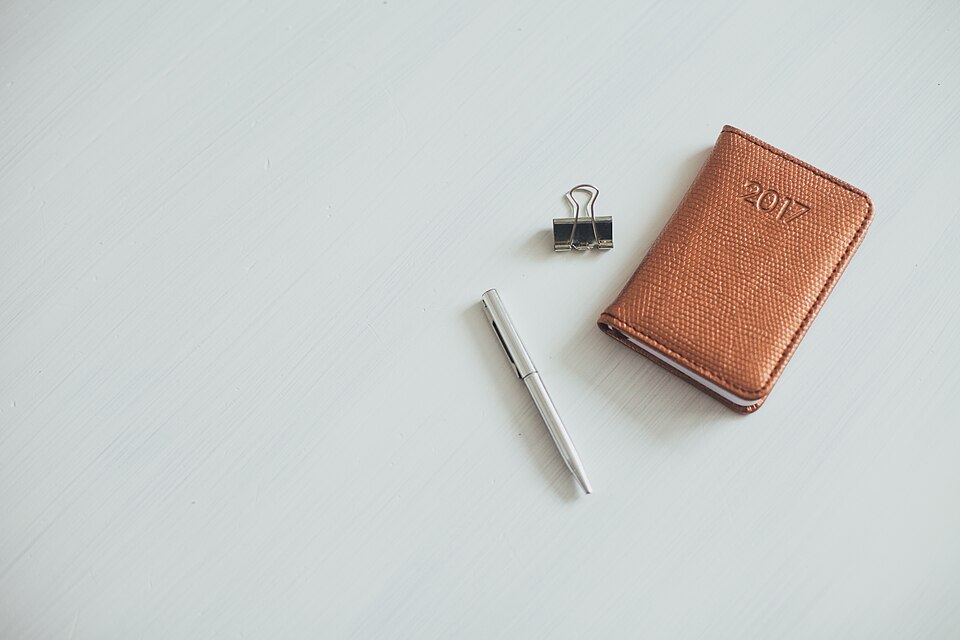
Featured image: Brown notebook, pencil and binder clips on a desk. Illustrative photograph. Photo: Kelly Jean kellyjean / Wikimedia Commons · CC0 1.0. Resized/compressed; no content edits.